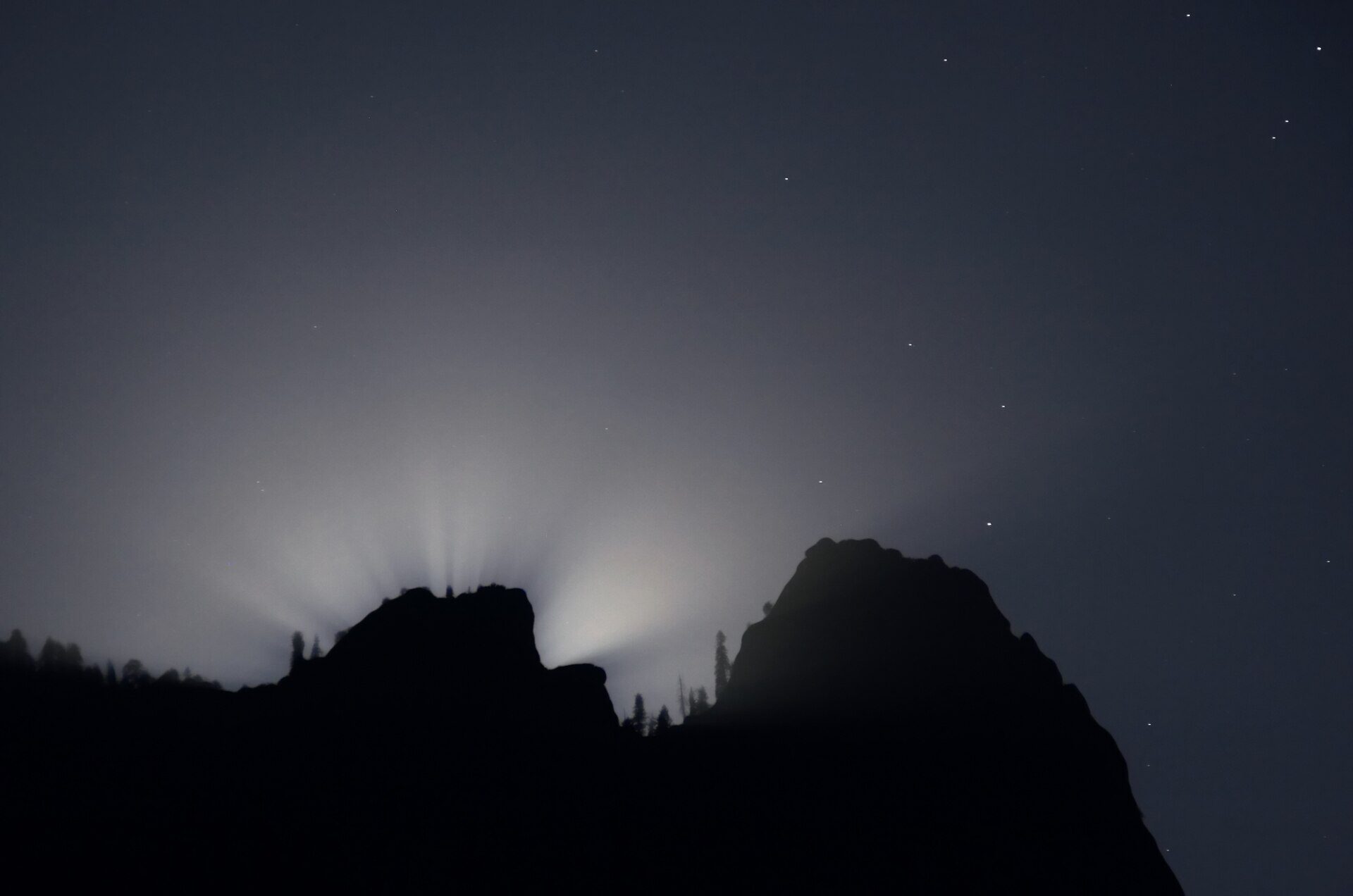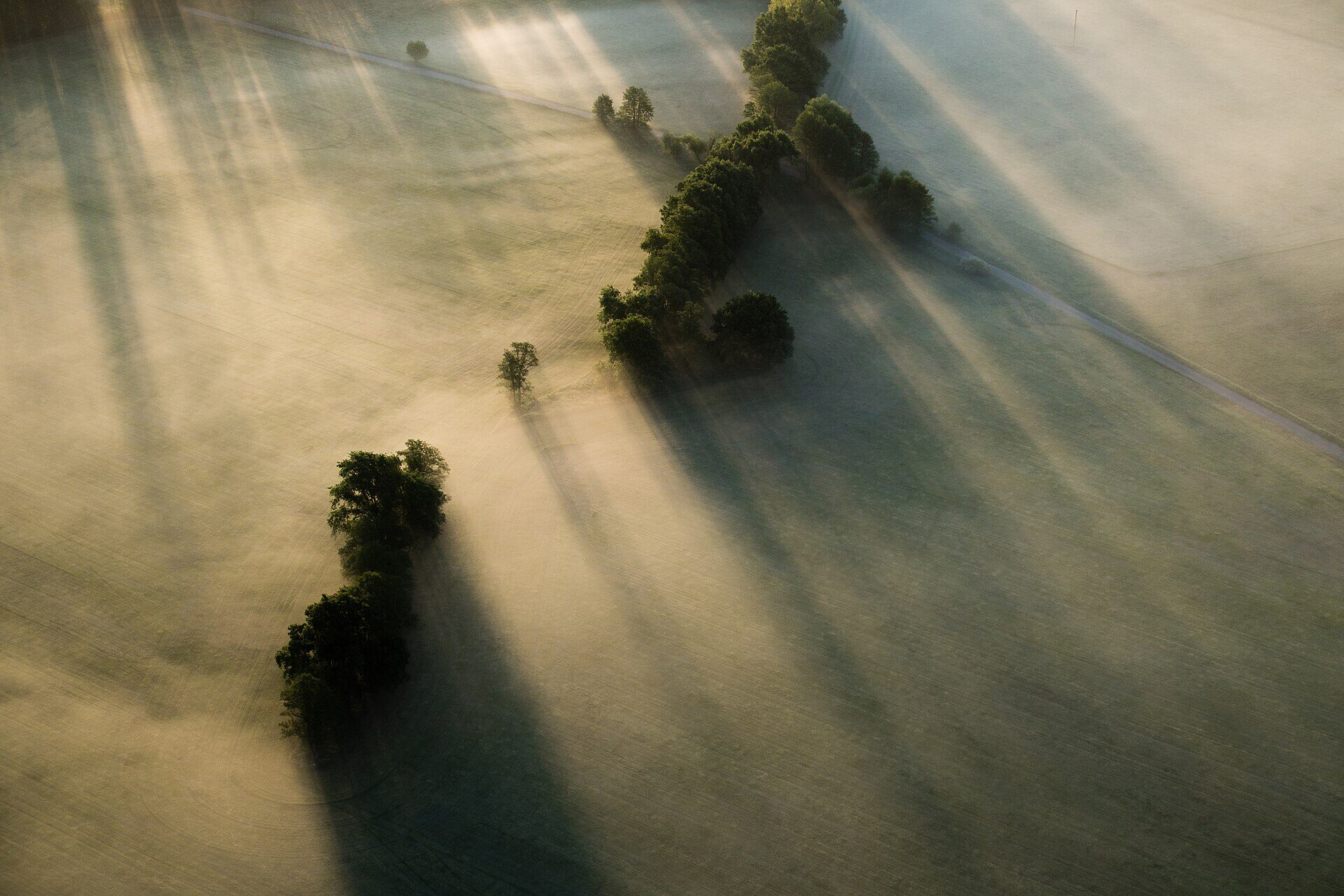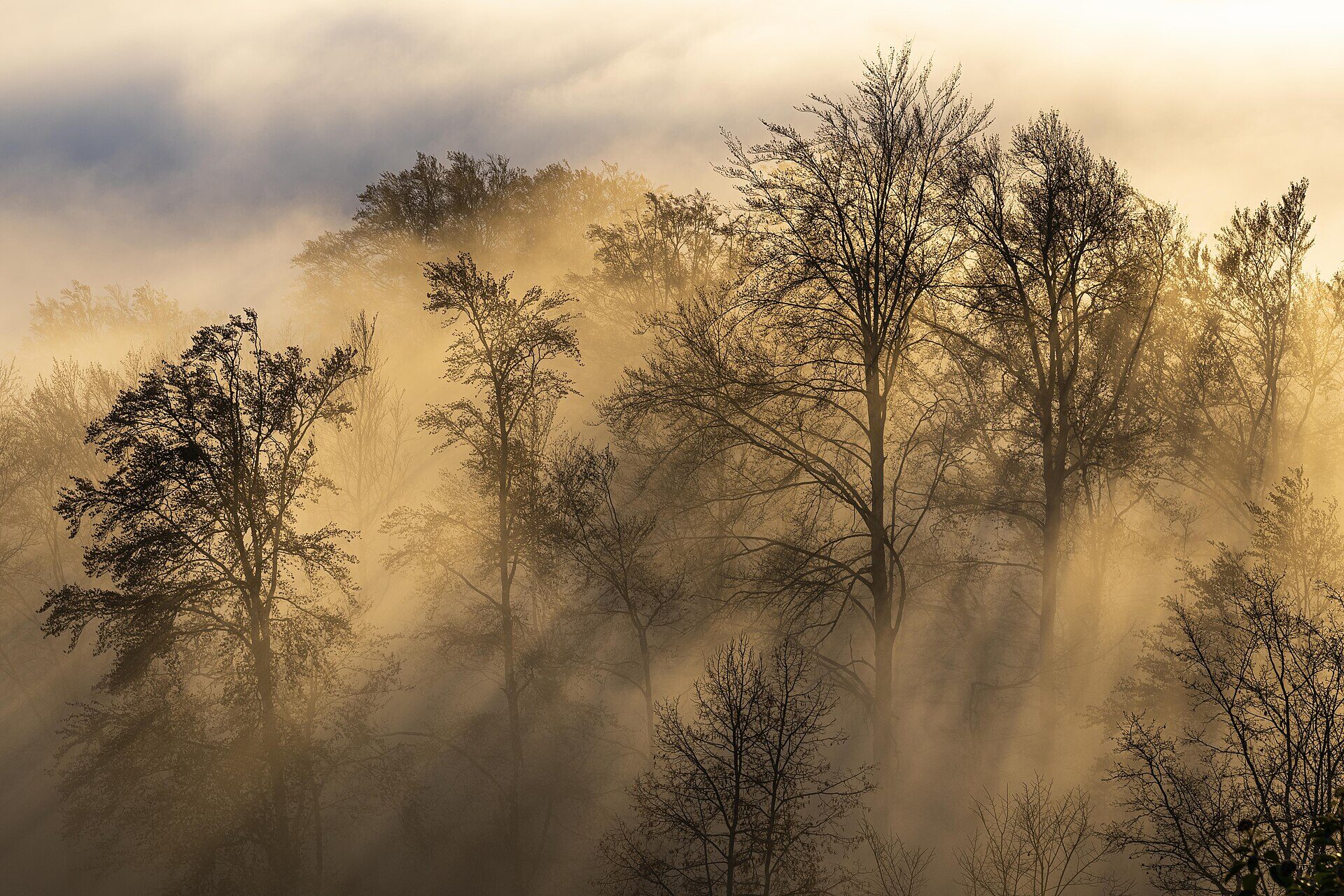
Sunbeams through fog and trees
The Uetliberg above Zurich. The low November sun’s last light, through trees and fog.Baumsilhouetten am Uetliberg mit Novembernebel und Sonnenstrahlen, Kuhnmi, CC BY-SA 4.0
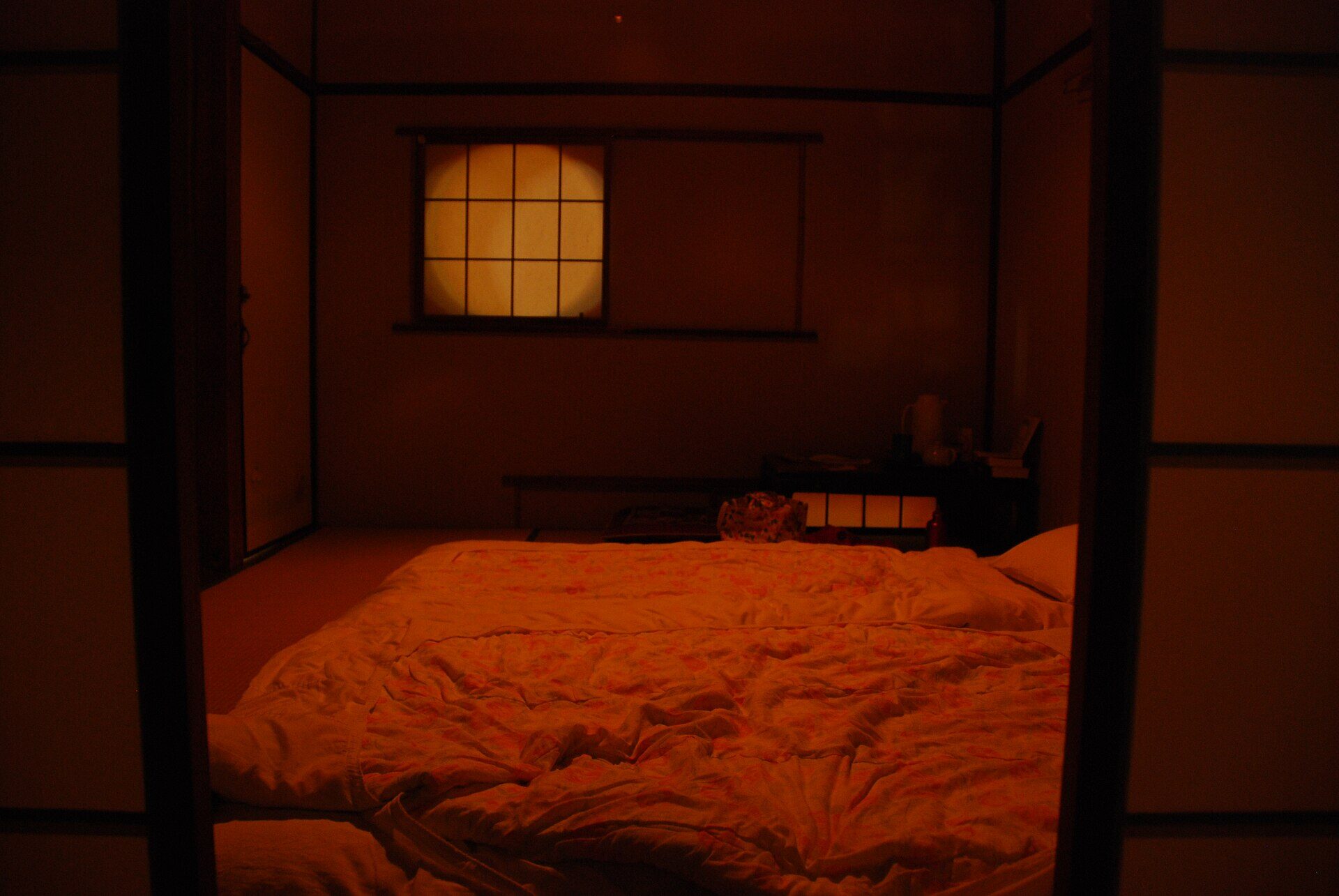
A ryokan room, Japan
Seikansō Ryokan, Japan, September 2009.Our room at Seikansō Ryokan (6156061472), Maarten Heerlien from Voorschoten, The Netherlands, CC BY 2.0

Read the room.

Point your iPhone at a lamp, a screen or the sky, and find out in a second whether that light is moving your sleep earlier, later, or not at all, so you know which lights to switch off at night. Wavelength uses iPhone’s camera to measure the light your body clock actually responds to.
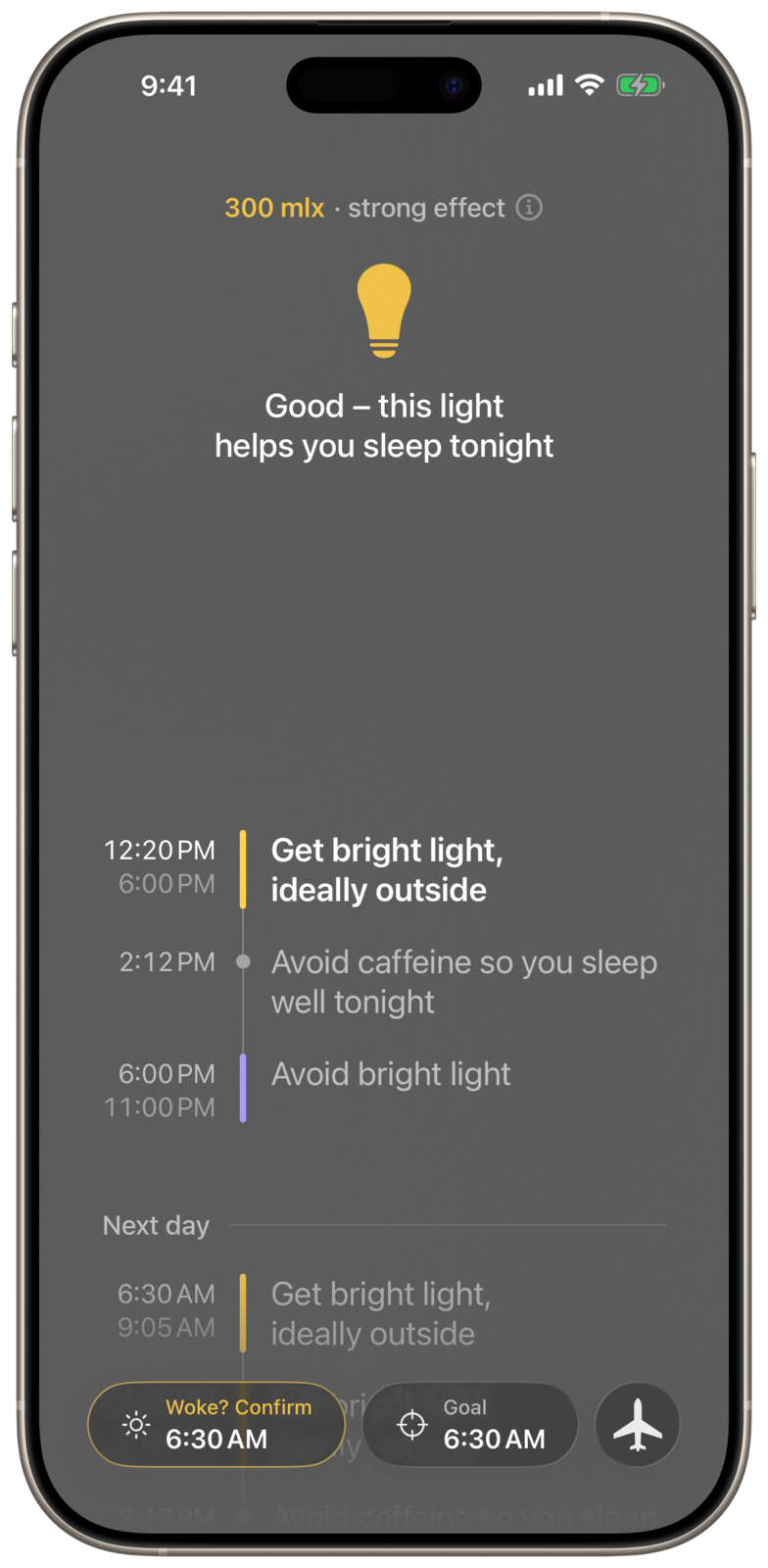
Wavelength on an iPhone held up in a room at midday: it reads 300 mlx and says this light is strengthening your body clock
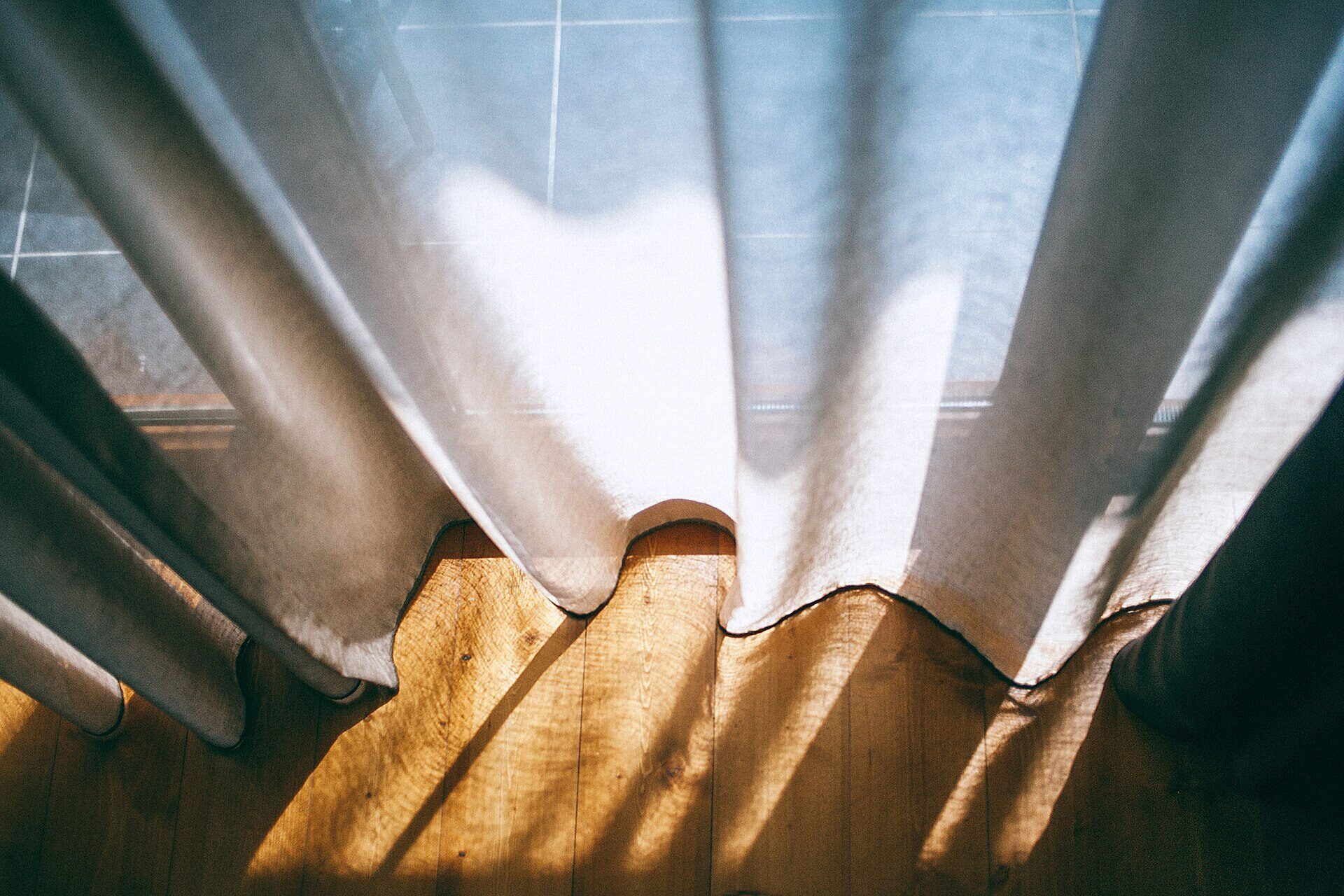
Light through curtains
Tbilisi, Georgia, July 2016.Windows Curtains Tbilisi (Unsplash), Orlova Maria orlovamaria, CC0

Bright ideas.

Stop morning light from pushing your sleep the wrong way. Find out when light helps and when it hurts, for the sleep schedule you want.
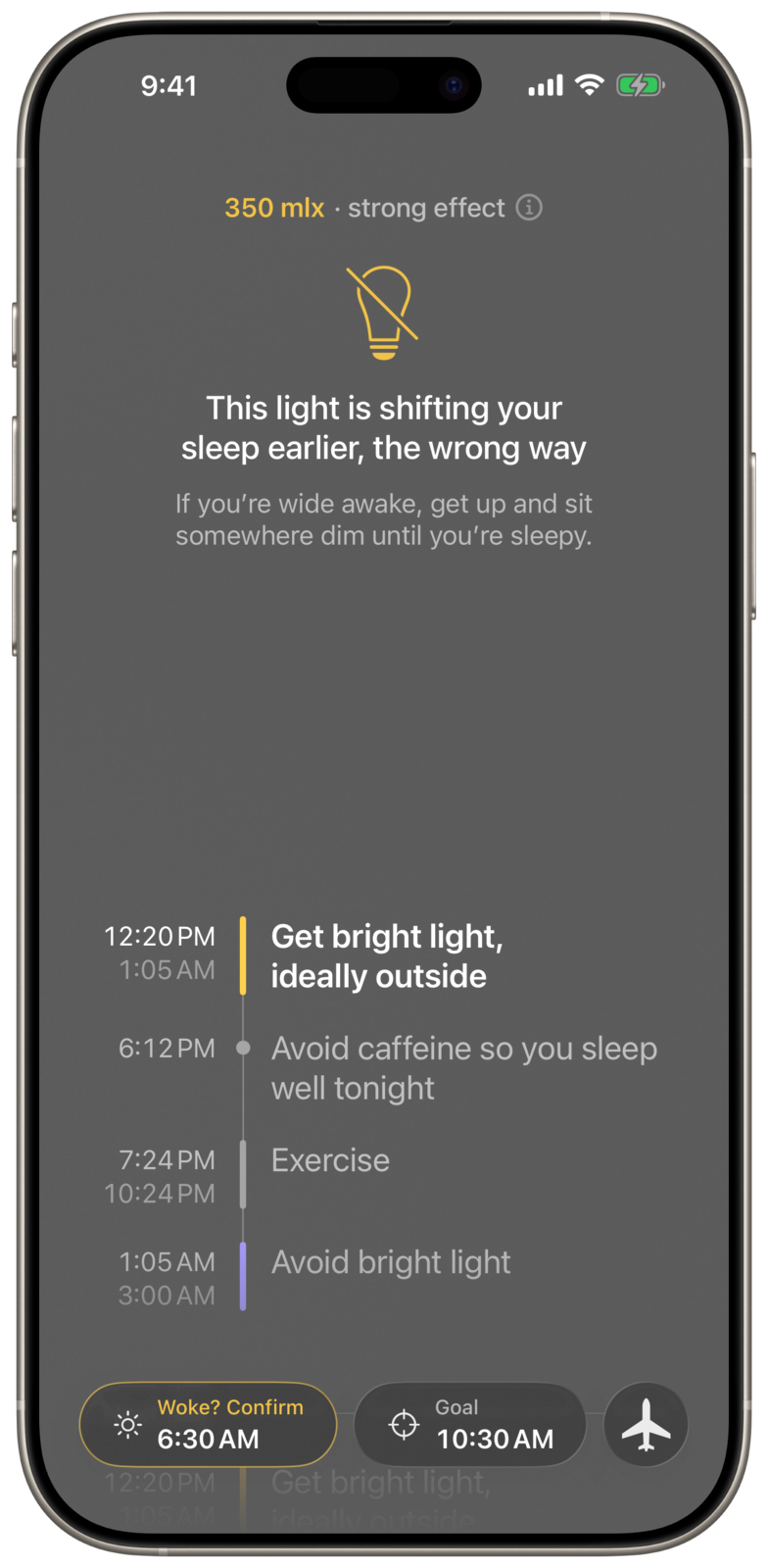
Wavelength on an iPhone held up to morning sun through curtains: it reads 350 mlx and warns This light is shifting your sleep earlier, the wrong way, with a plan that starts with 0.5 mg of melatonin
A hotel pillow and bedding
Hotel Pillow and Bedding (39935420303), Tony Webster from Minneapolis, Minnesota, United States, CC BY 2.0

Overnight success.

Leave your phone by the bed with the flashlight facing you, and wake up with your body clock already shifted. While you sleep, Wavelength sends brief flashes through your closed eyelids at the right hour. It’s based on sleep-lab research.
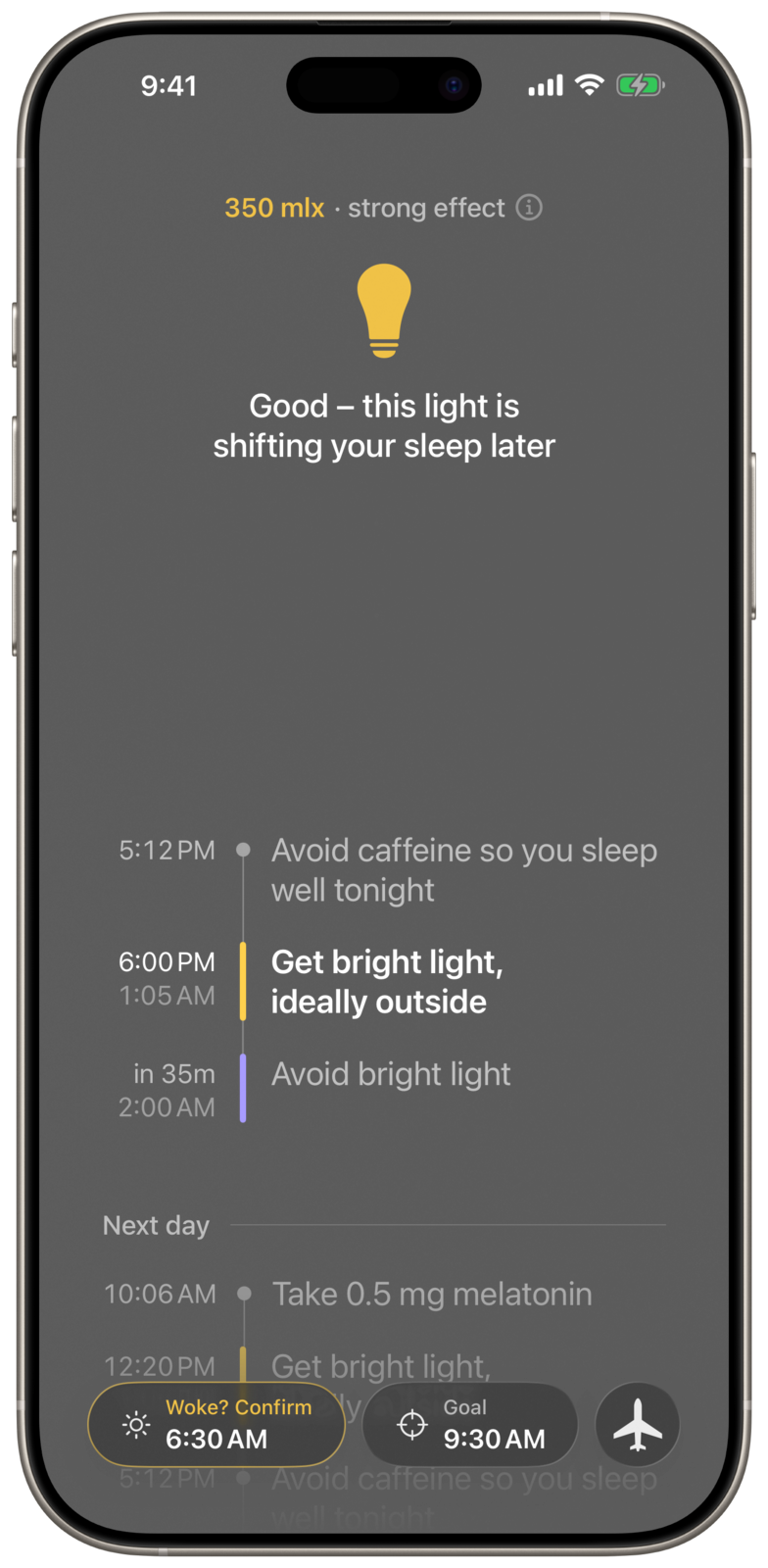
Wavelength on an iPhone over a brightly lit bed after midnight: Good, this light is shifting your sleep later, and a night plan that says to stand the phone on its side with its back facing you
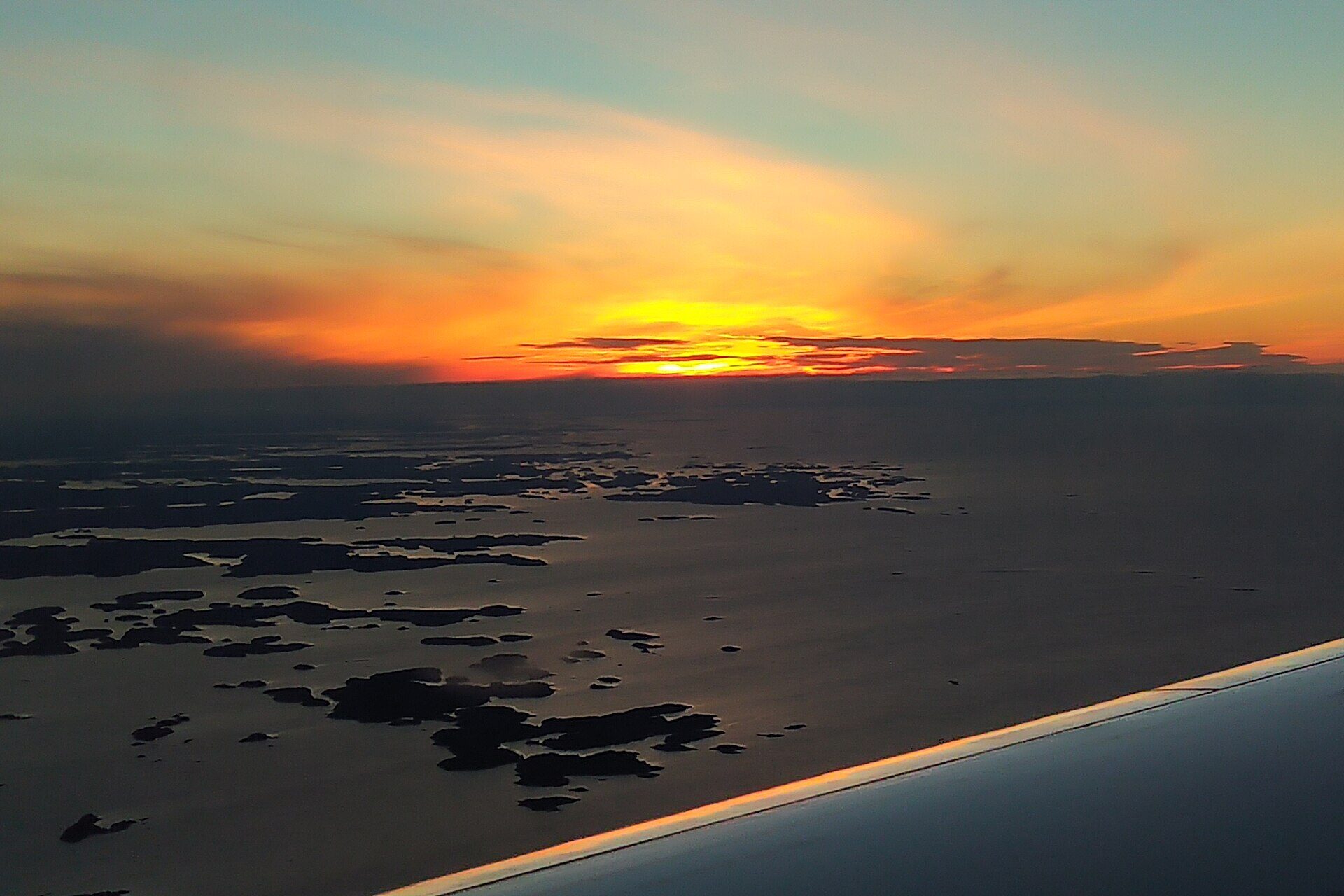
Sunrise from a plane window
The photographer couldn’t sleep on the flight home to Australia, so looked out the window.Flying through the sunrise - Flickr - Lenny K Photography, Lenny K Photography from Sydney, Australia, CC BY 2.0

Time flies.

Get over jet lag faster. Wavelength makes you a personalized plan that tells you when to get daylight, when to stay out of it, and when to take melatonin, so you’re awake when the trip starts, not at 3 am.
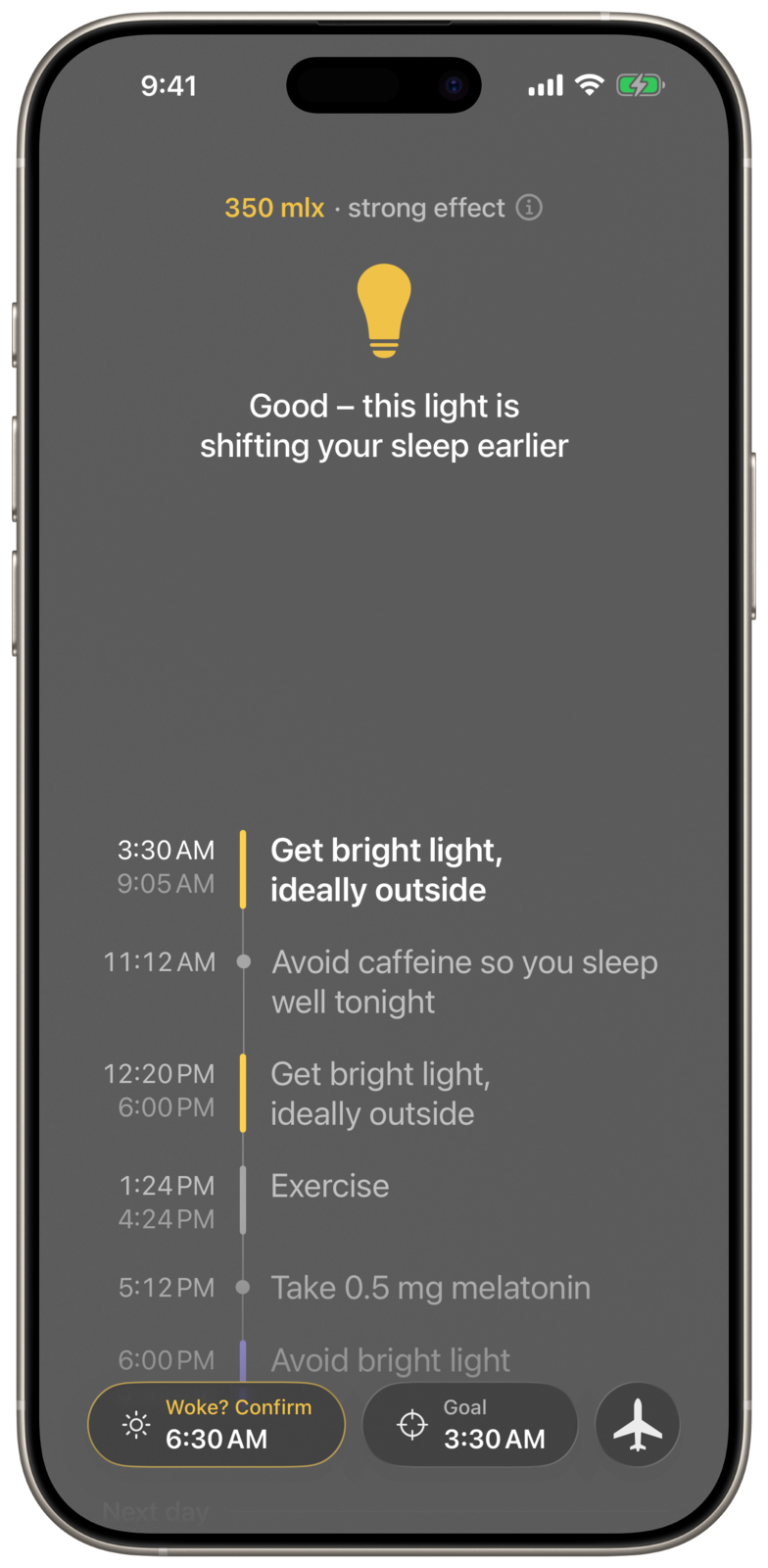
Wavelength on an iPhone held up to sunrise through a plane window: it reads 350 mlx, strong effect, and Good, this light is shifting your sleep earlier, above the day's jet lag plan
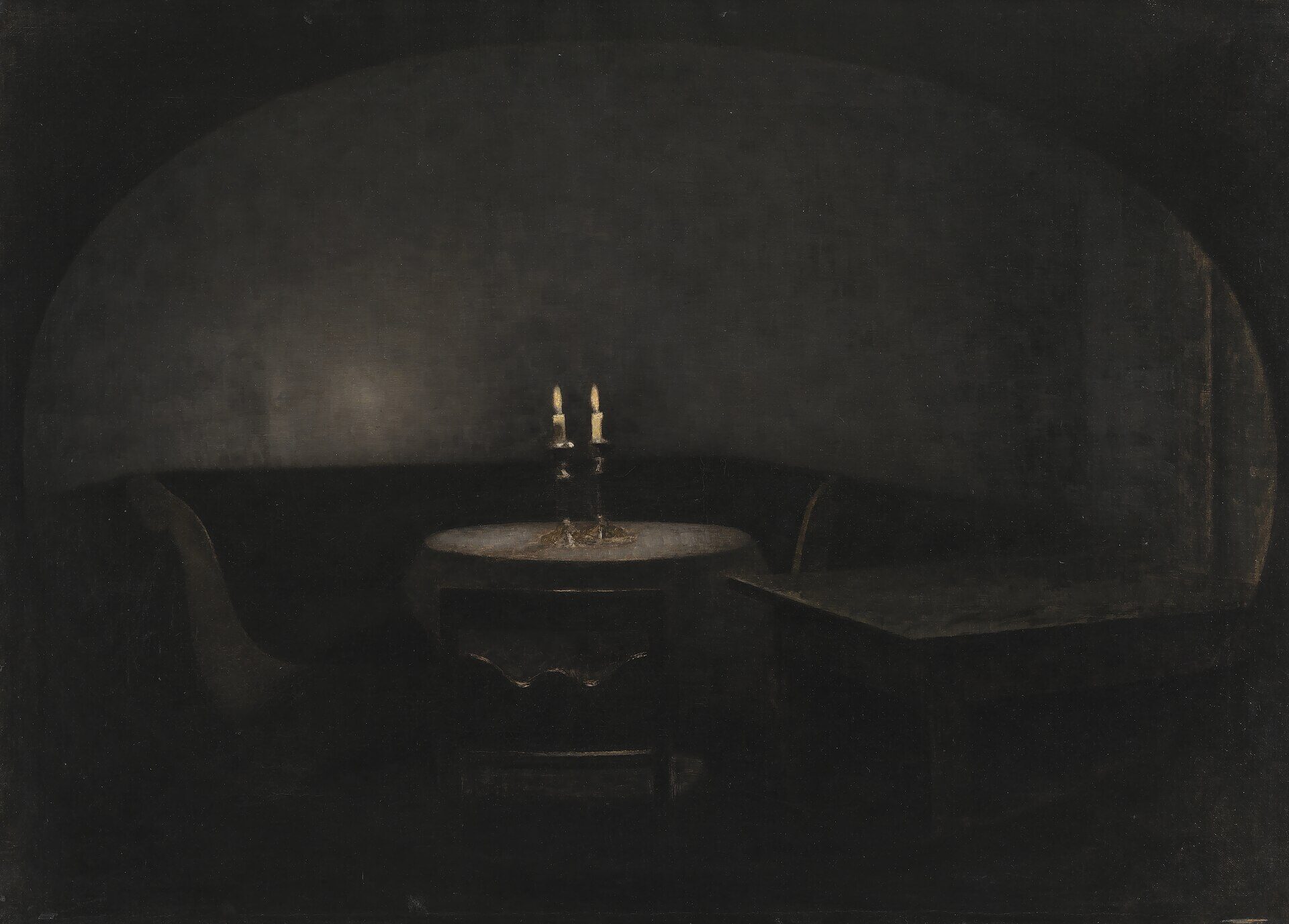
Hammershøi: lamplight in a dark room
Vilhelm Hammershøi, Interior, Artificial Light, 1909. Painted the year he left Strandgade 30.Vilhelm Hammershøi, Interiør Kunstigt lys, 1909, KMS8677, Statens Museum for Kunst, Vilhelm Hammershøi, Public domain

Shift happens.

Tell Wavelength when you need to be up, and wake up on time without a fight. Get a light plan hour by hour, with a reminder as each window opens, night shifts included.
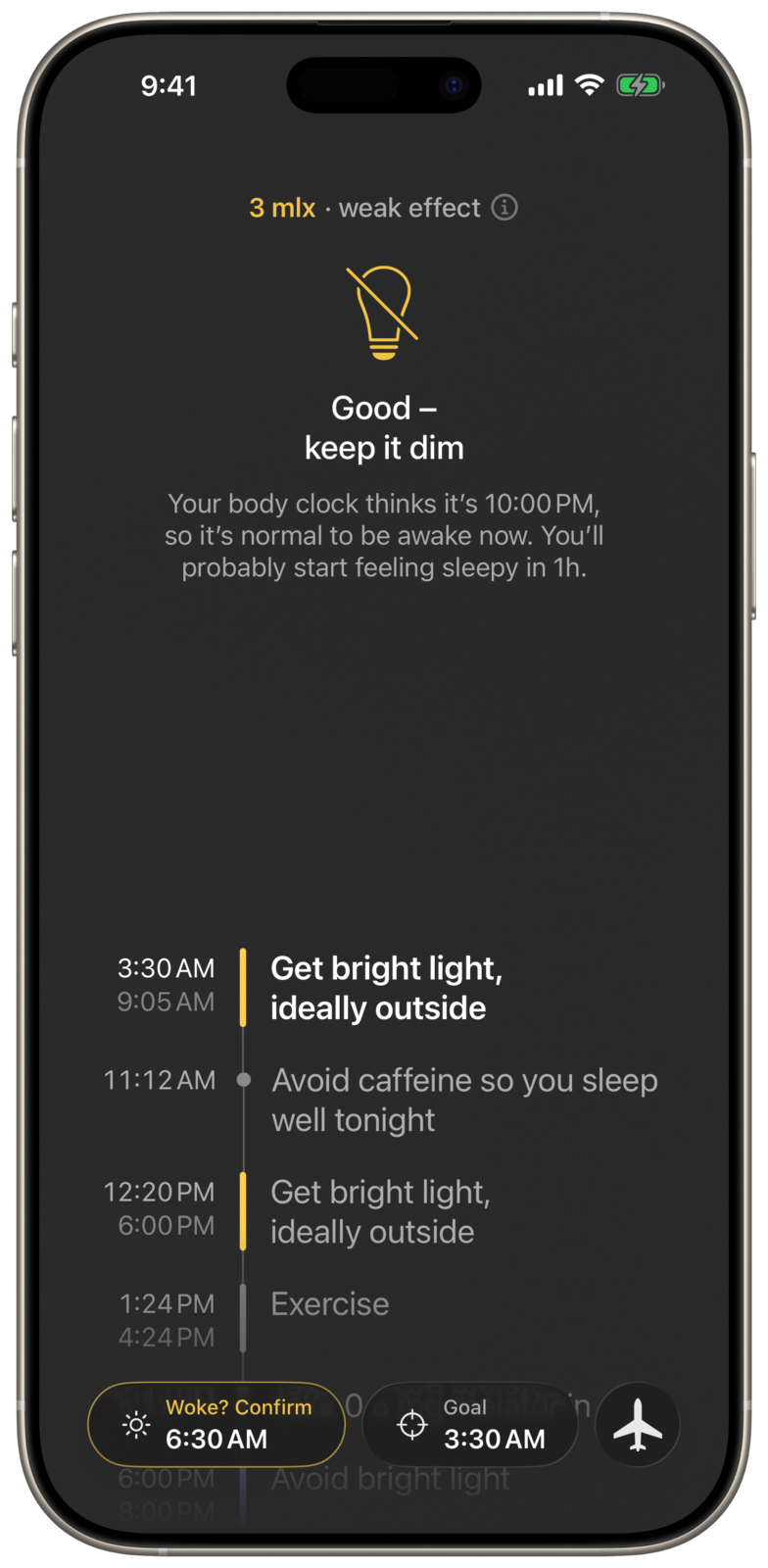
Wavelength on an iPhone in a dim lamplit room at night: it reads 3 mlx and says Good, keep it dim
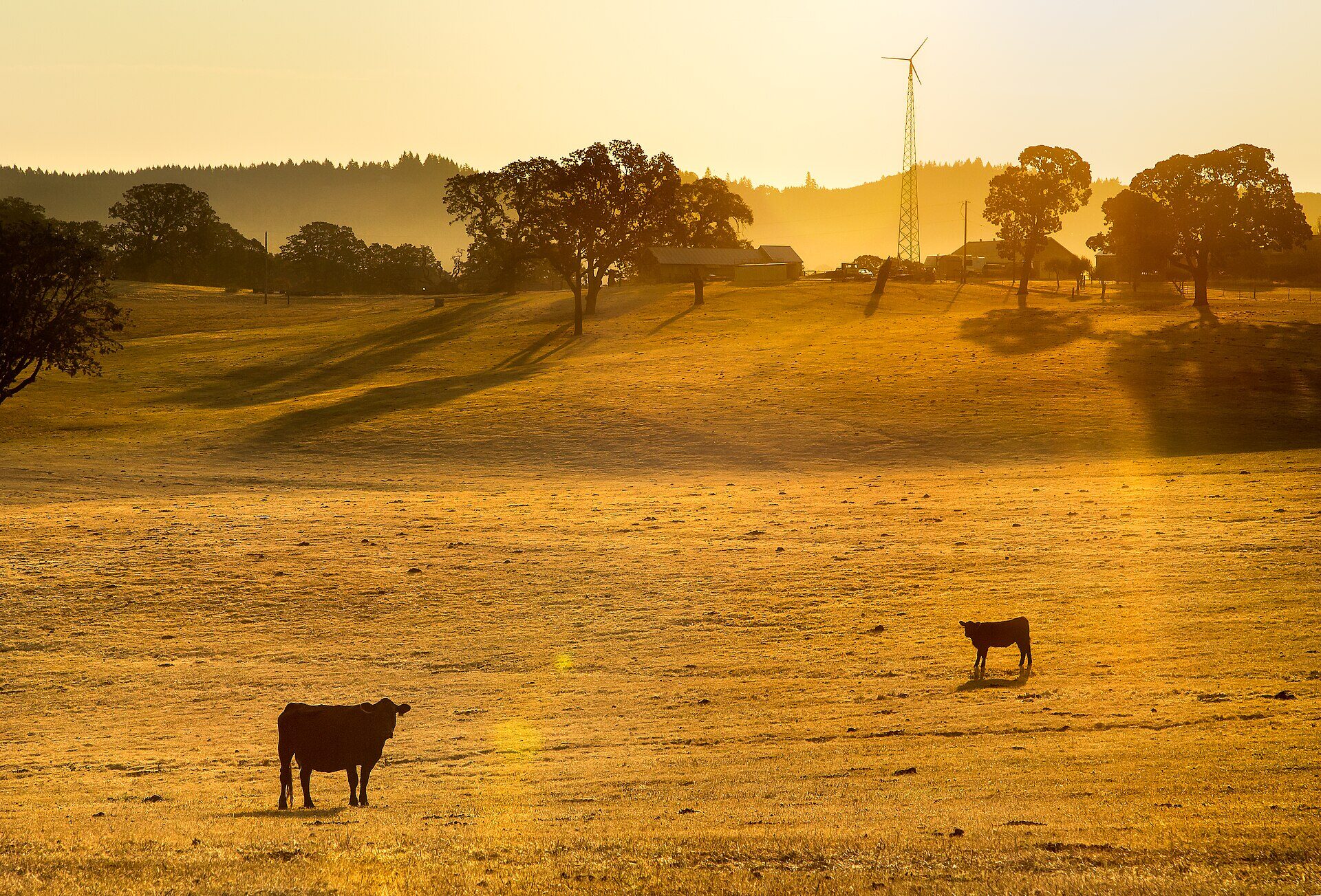
Sunrise over Finland from the air
A window seat at dawn, over Finland.Sunrise over Finland - Flickr - Vicky Brock, Vicky Brock from Tallinn, UK, CC BY-SA 2.0
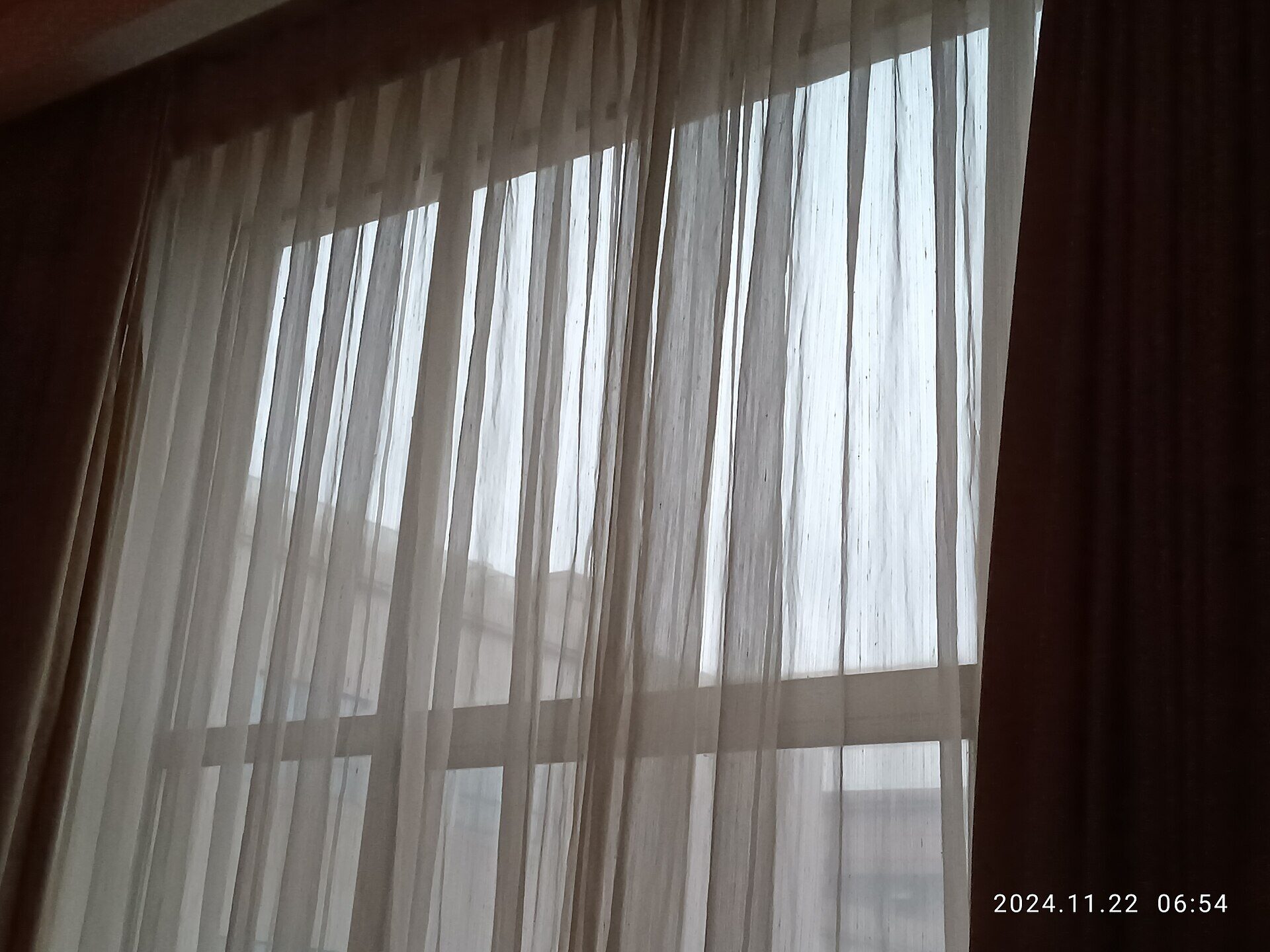
White curtains in morning light
A hotel window in Zhongshan, China, on a November morning in 2024.GD 廣東 Guangdong ZS 中山 Zhongshan 古鎮 Guzhen 燈都時代酒店 Light Era Hotel room window white curtain 晨早 morning November 2024 R12S 01, TWMEAU rOEPPOUL, CC0
An everyday sunrise
“There’s a sunrise and a sunset every single day, and they’re absolutely free.” The photographer took Jo Walton’s advice and got up for this one.Everyday sunrise (21214162289), Sheila Sund from Salem, United States, CC BY 2.0
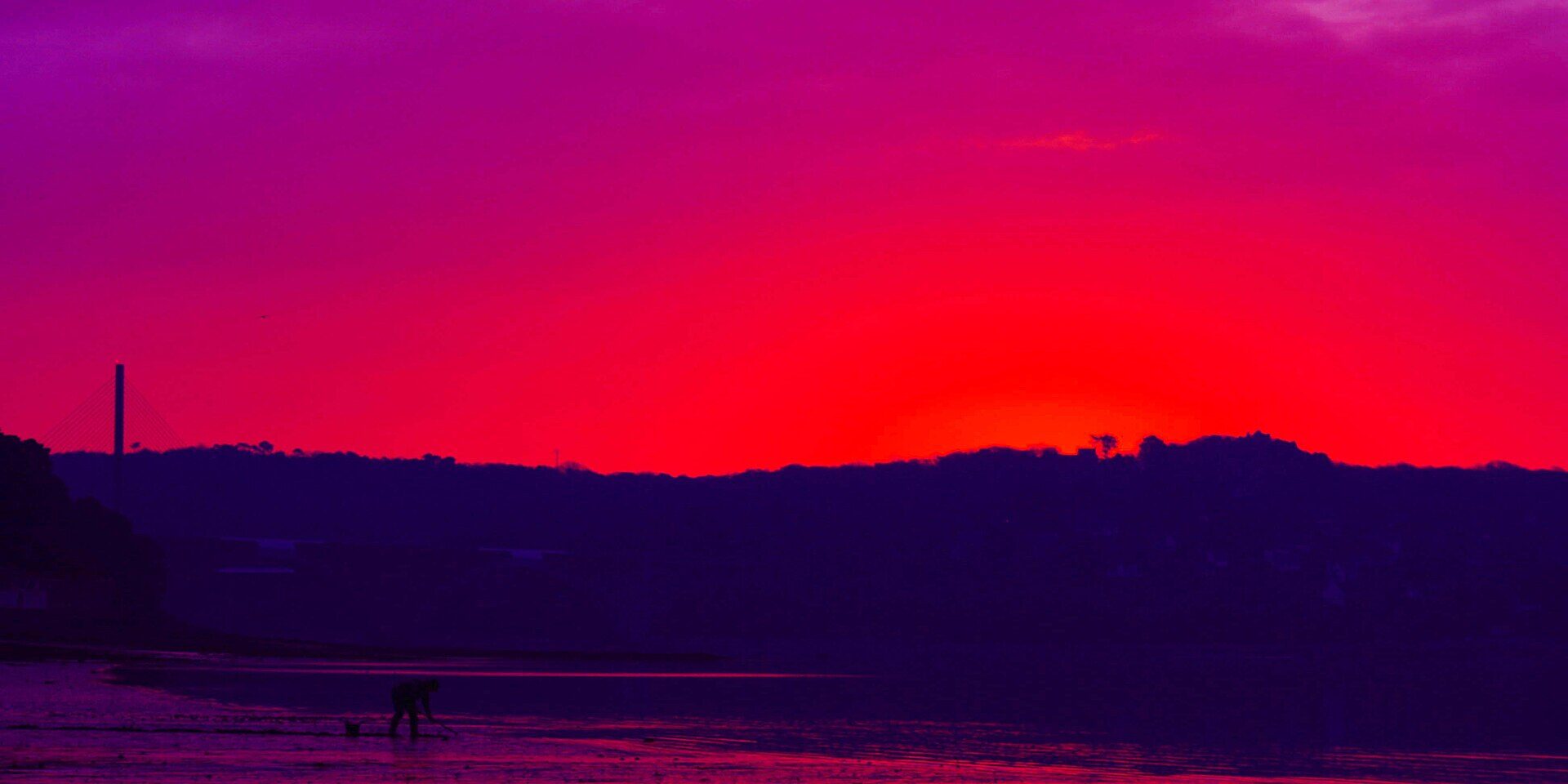
Early to bed, early to rise
Brest, Brittany, 22 December 2007. The sky really was pink that morning.Flickr - law keven - Early to bed, Early to Rise..., Keven Law from Los Angeles, USA, CC BY-SA 2.0
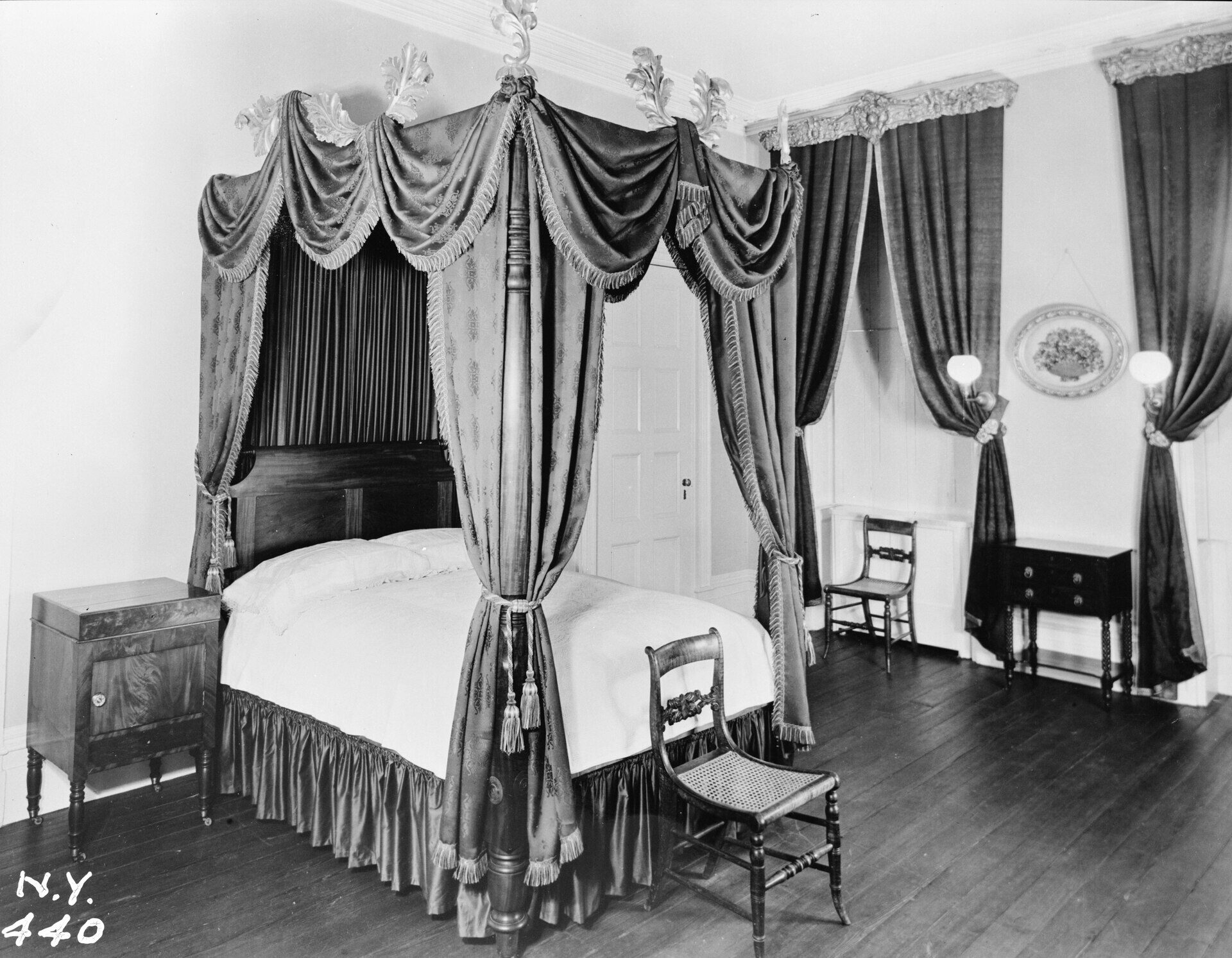
Draped windows, 1936 (archival)
New York, 25 May 1936. The front bedroom of the Seabury Tredwell House, now the Merchant’s House Museum.Historic American Buildings Survey, Wohlfahrt Studio, Photographer May 25, 1936, DRAPED WINDOWS AND BED - FRONT BEDROOM, SECOND FLOOR. - Seabury Tredwell House, 29 East Fourth HABS NY,31-NEYO,30-19 (cropped), Unknown author, Public domain
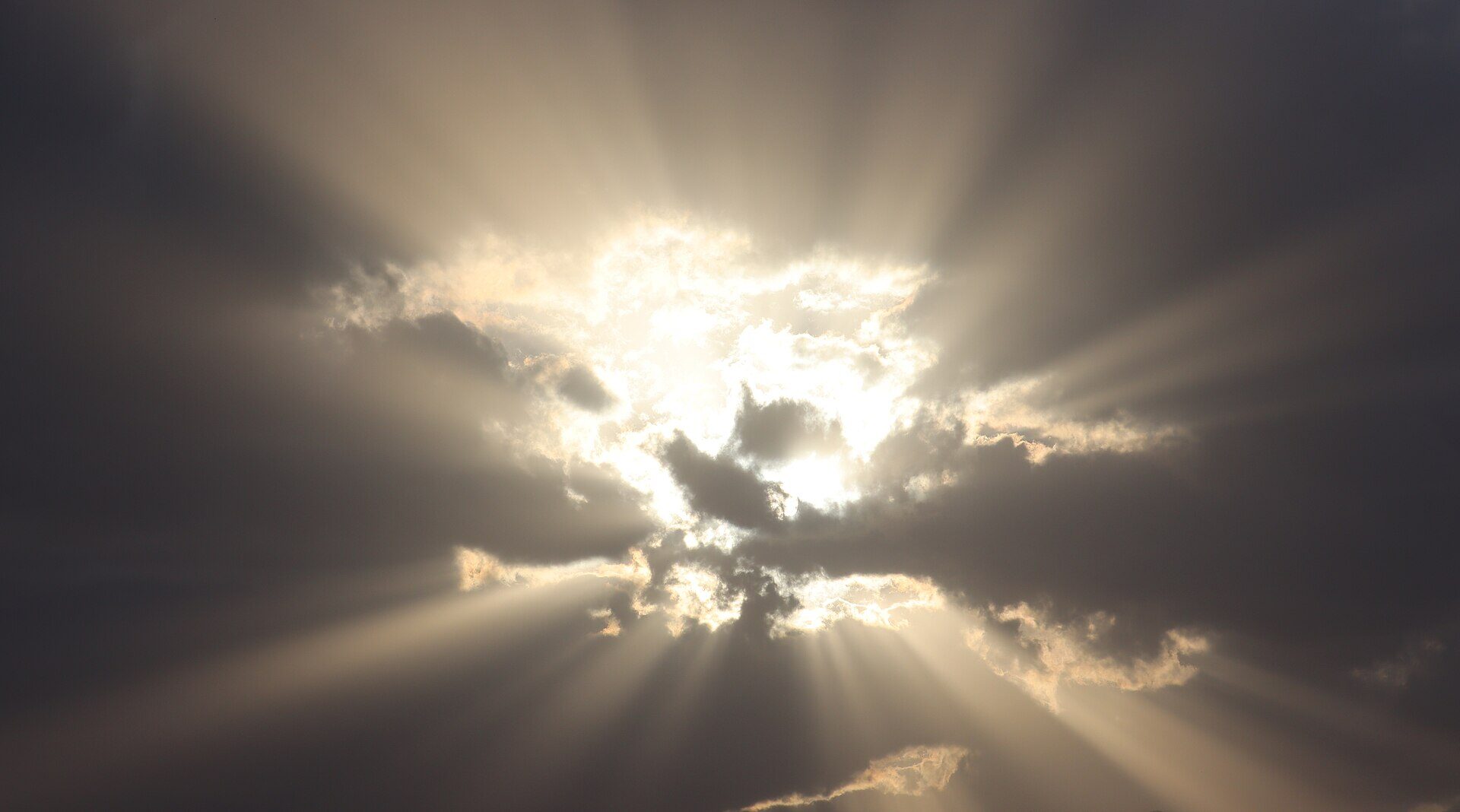
Sunrays through clouds
Lloyd Lake, Golden Gate Park, September 2010. A second set of rays rises from the sun’s reflection.Crepuscular rays 09-11-2010 1, Brocken Inaglory, CC BY-SA 3.0
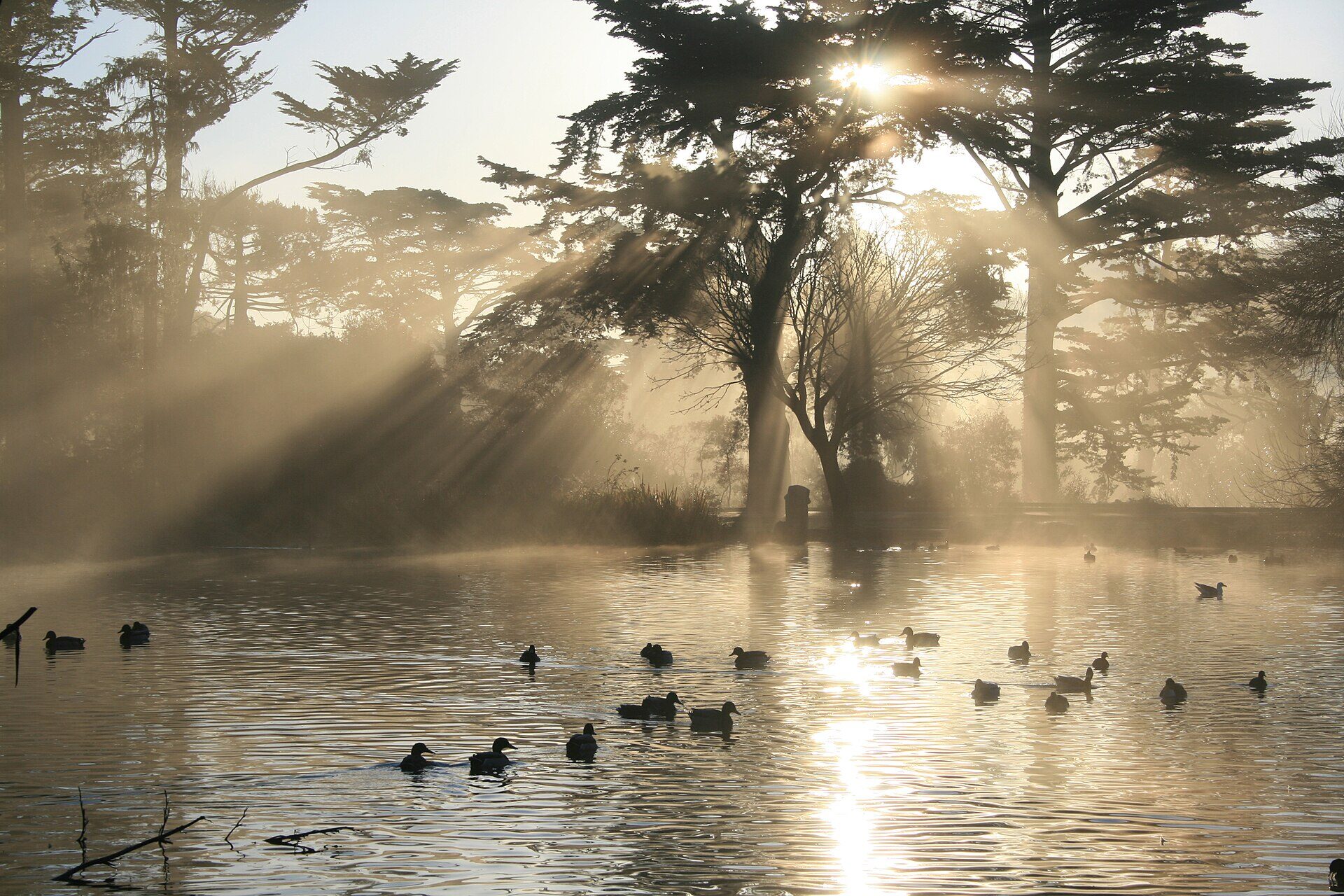
Rays in Golden Gate Park
Stow Lake, Golden Gate Park, 2008.Crepuscular rays in ggp 2, Brocken Inaglory, CC BY-SA 4.0
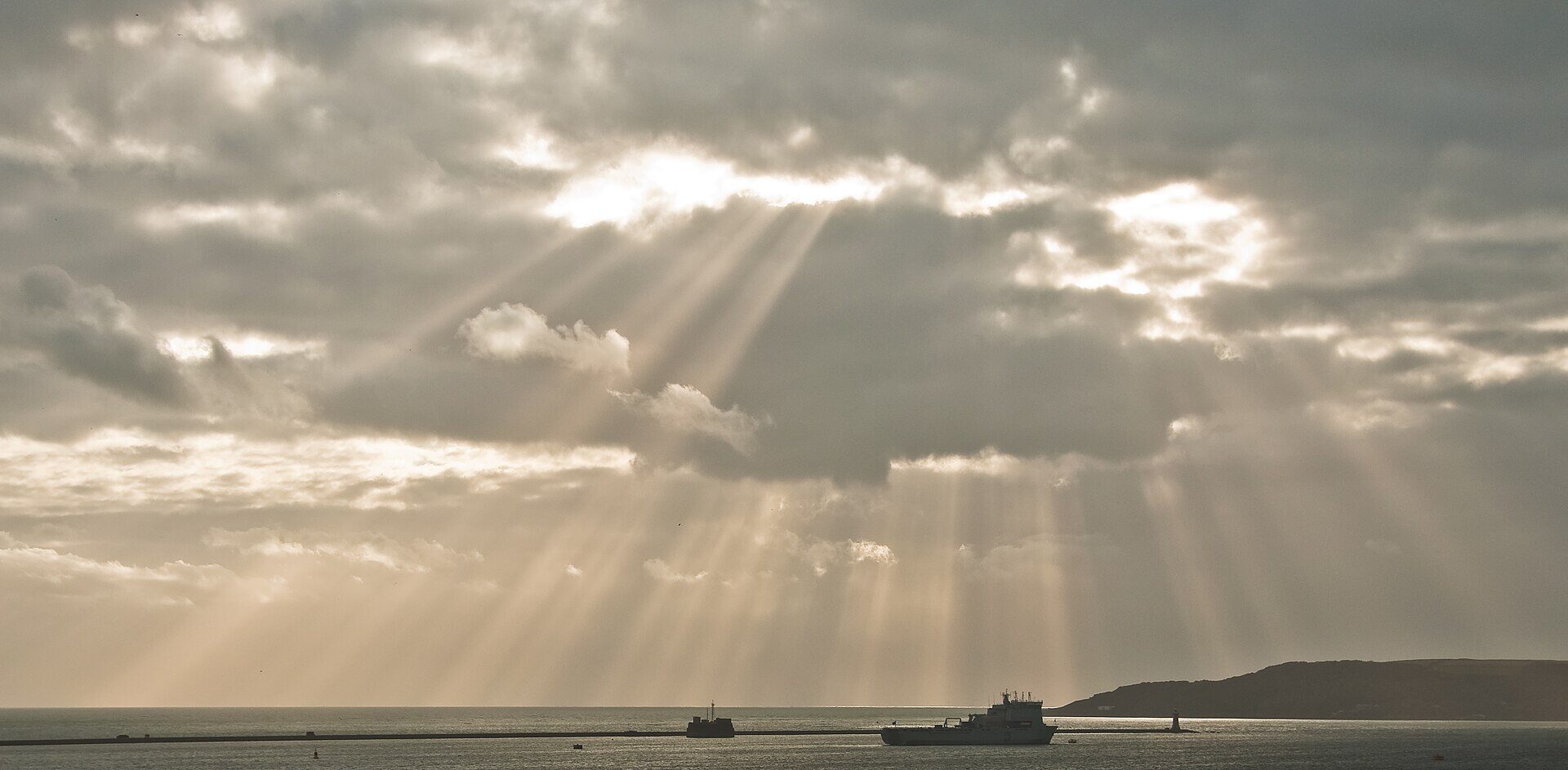
Rays over Plymouth Sound
Plymouth Sound, England, January 2010. The breakwater’s fort and lighthouse below.Crepuscular rays over Plymouth Sound crop, Crepuscular_rays_over_Plymouth_Sound.jpg: Nilfanion derivative work: Herby talk thyme, CC BY-SA 3.0
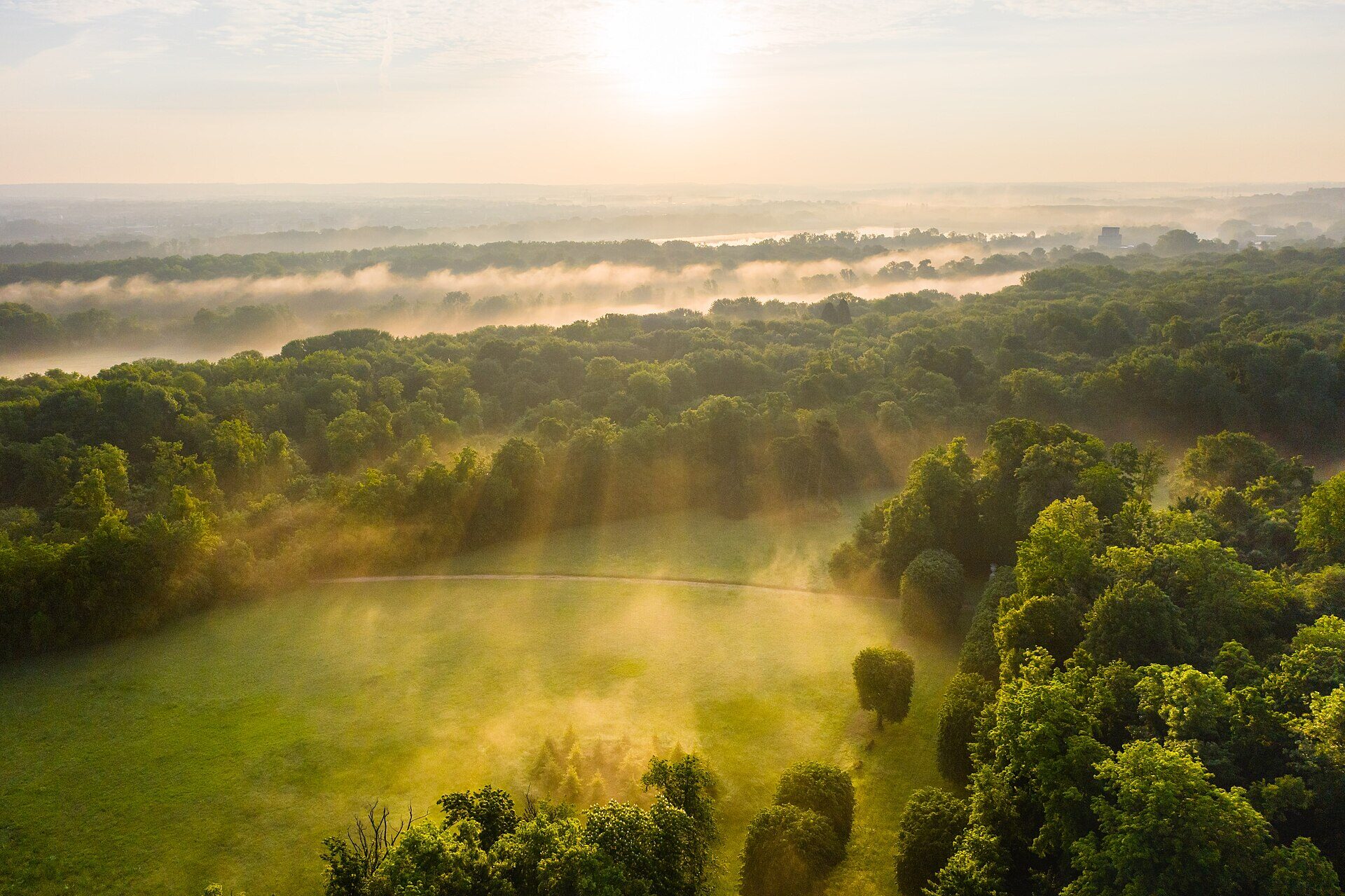
Rays over a park at sunrise
Parc de Noisiel, France, at sunrise on 26 May 2019.Crepuscular rays over parc de Noisiel at sunrise, 26 May 2019, Benh LIEU SONG (Flickr), CC BY-SA 4.0
Moonlight rays at night
Crepuscular rays by moonlight.Lunar Crepuscular Rays 2, Brocken Inaglory, CC BY-SA 3.0
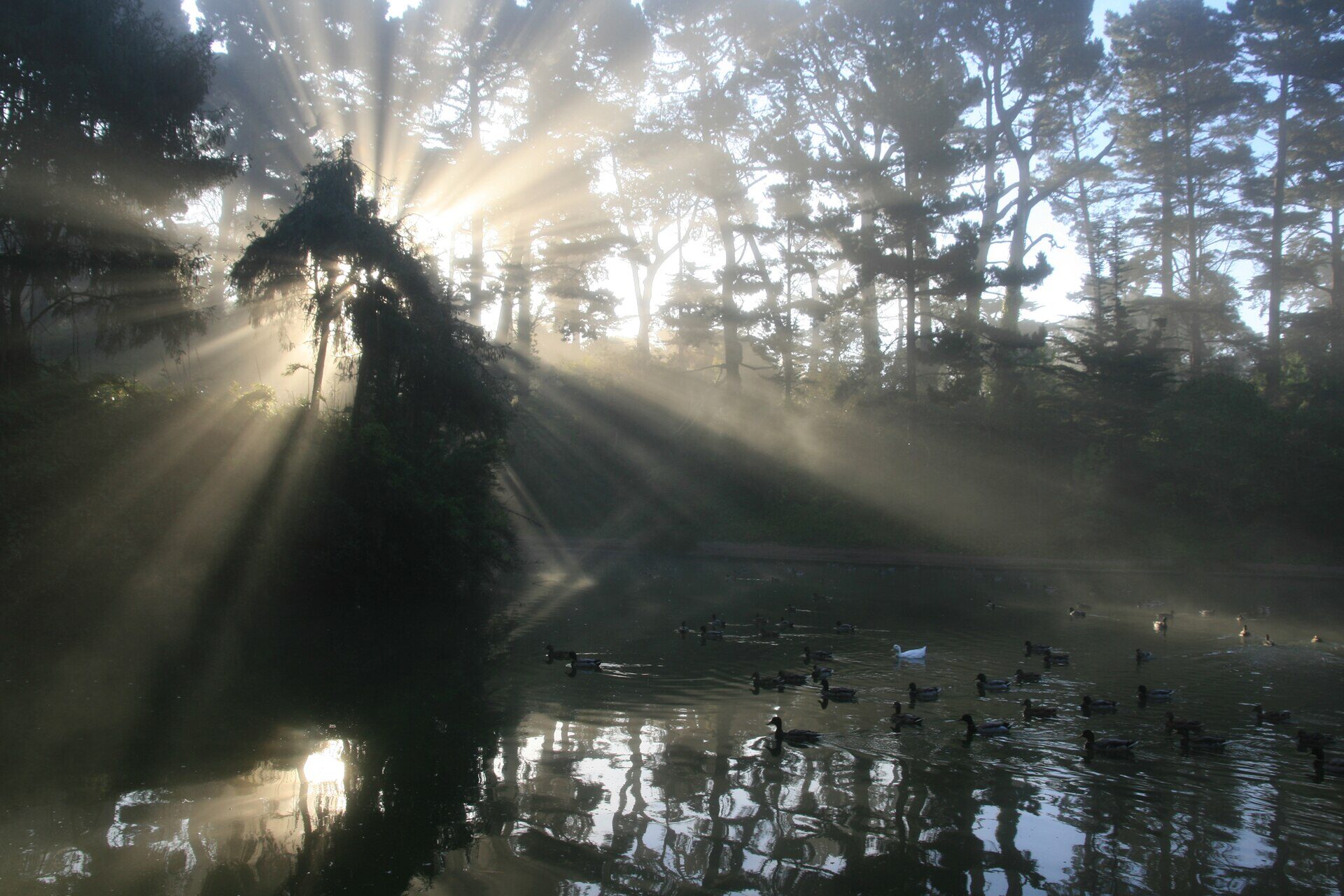
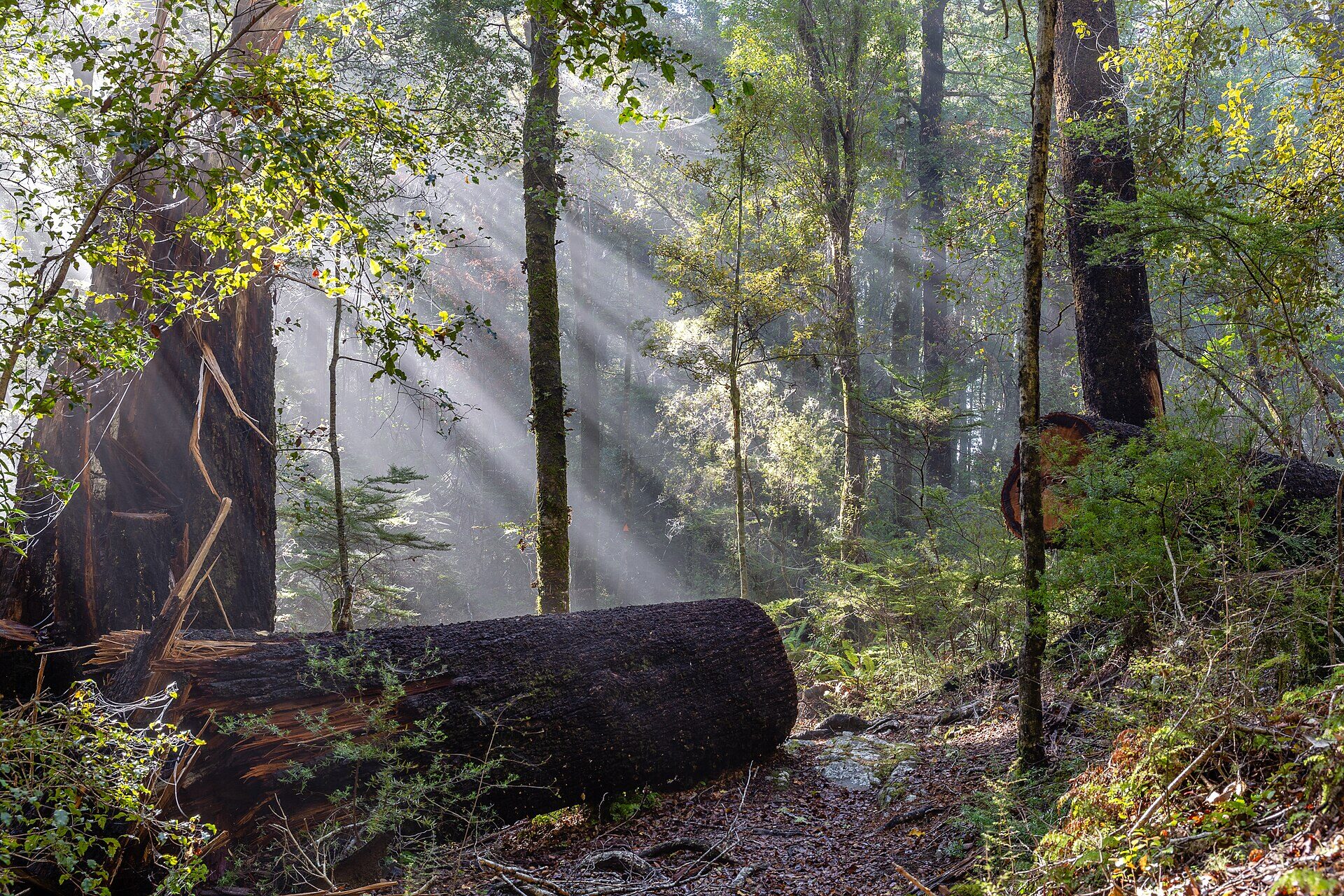
Sun through fog in a forest
Bryant Range, New Zealand, on the Te Araroa Trail between Rocks Hut and Middle Creek Hut.Sun getting through fog in the New Zealand bush, Bryant Range, Michal Klajban, CC BY-SA 4.0
Sunrays over a valley
Crepuscular rays over Tikveš, North Macedonia, October 2023.Сончеви зраци над Тиквеш (cropped), Kiril Simeonovski, CC BY 4.0
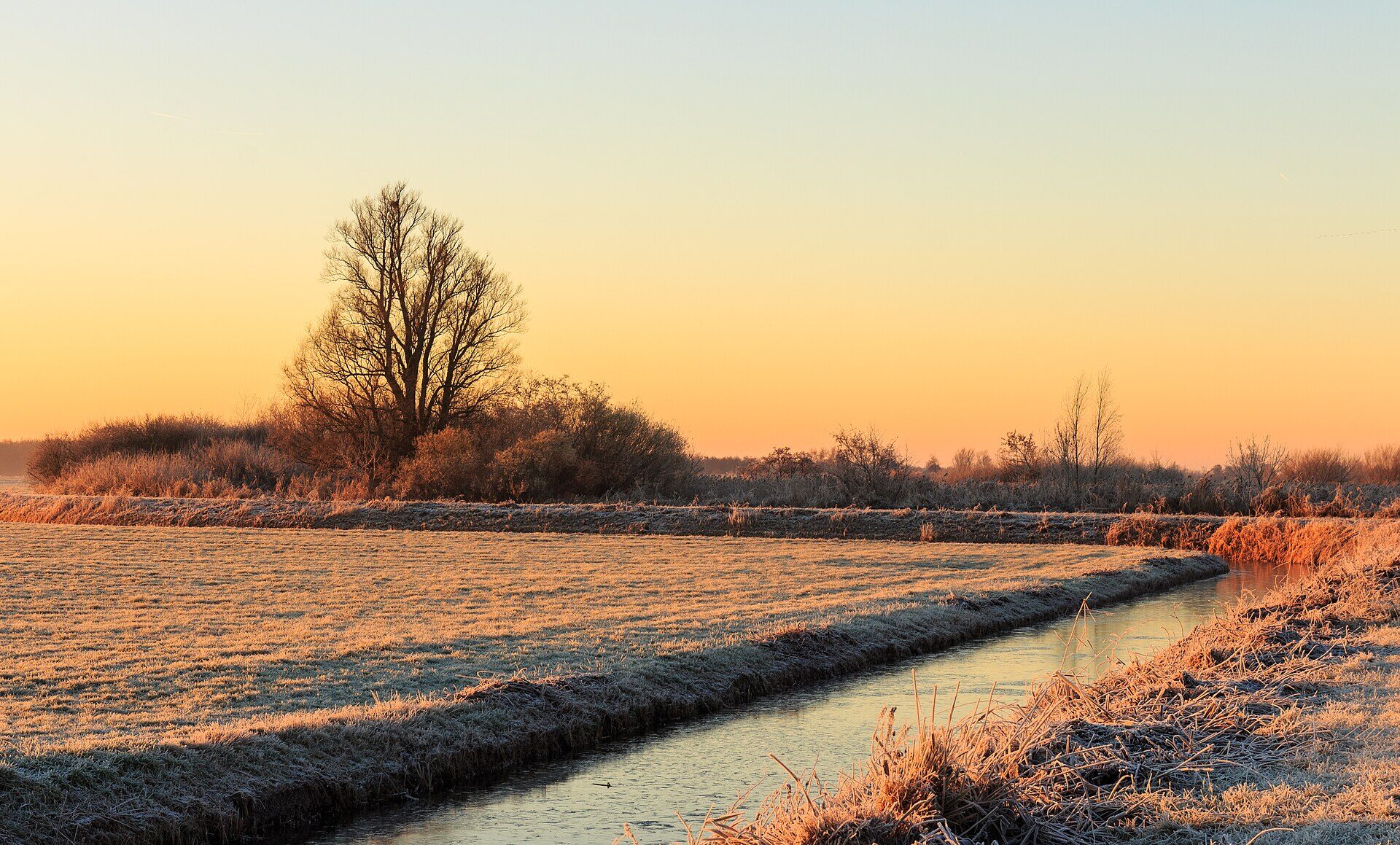
First sunlight on winter fields
The first sunbeams over a winter landscape. Friesland, December 2016.Eerste zonnestralen strijken over een winters landschap. Locatie, Langweerderwielen (Langwarder Wielen) en omgeving 04, Dominicus Johannes Bergsma, CC BY-SA 4.0
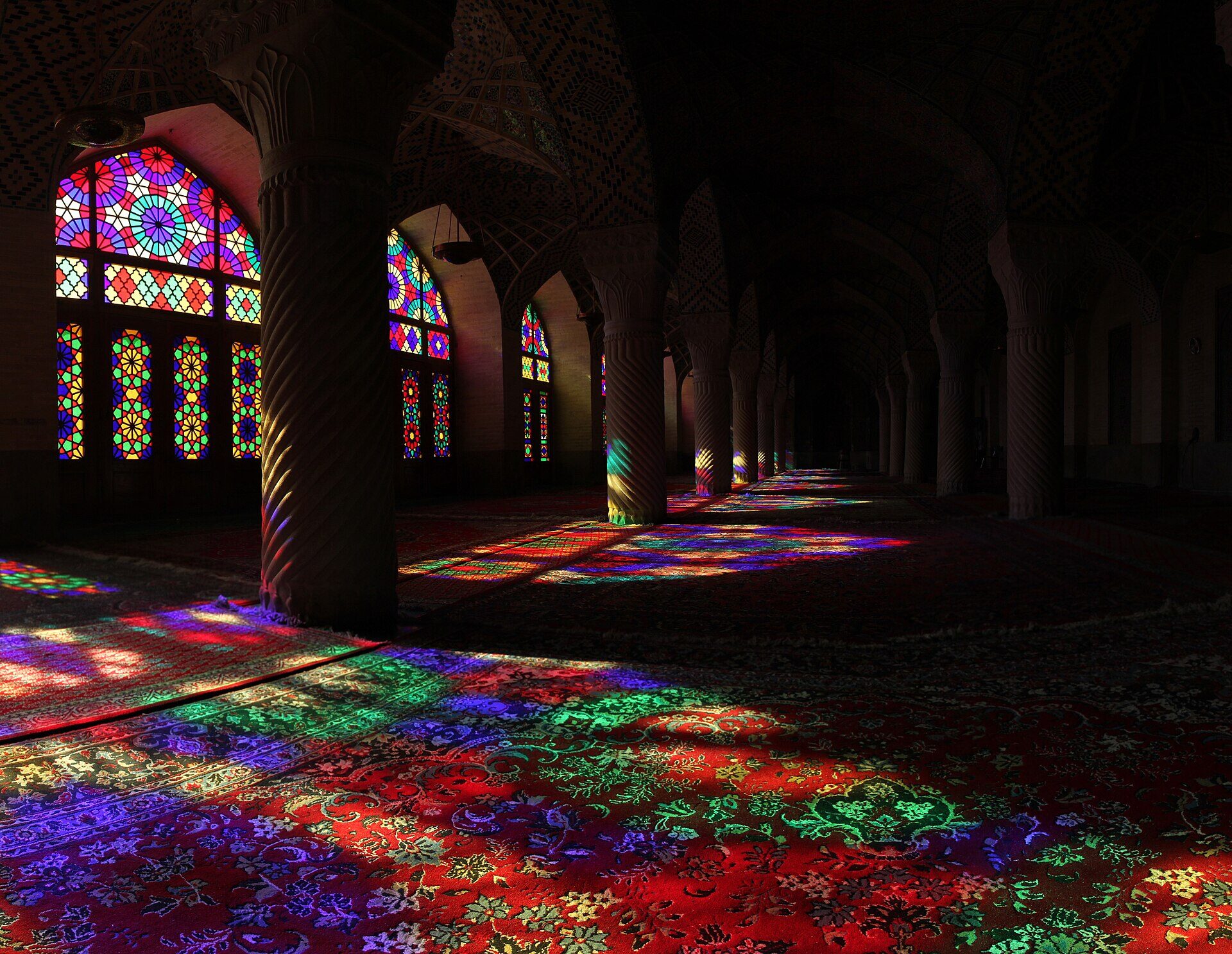
Colored light, Nasir al-Mulk Mosque
Nasir al-Mulk Mosque, Shiraz. Its colored glass throws the light across the carpets.Nasir-al molk -1, Ayyoubsabawiki, CC BY-SA 4.0
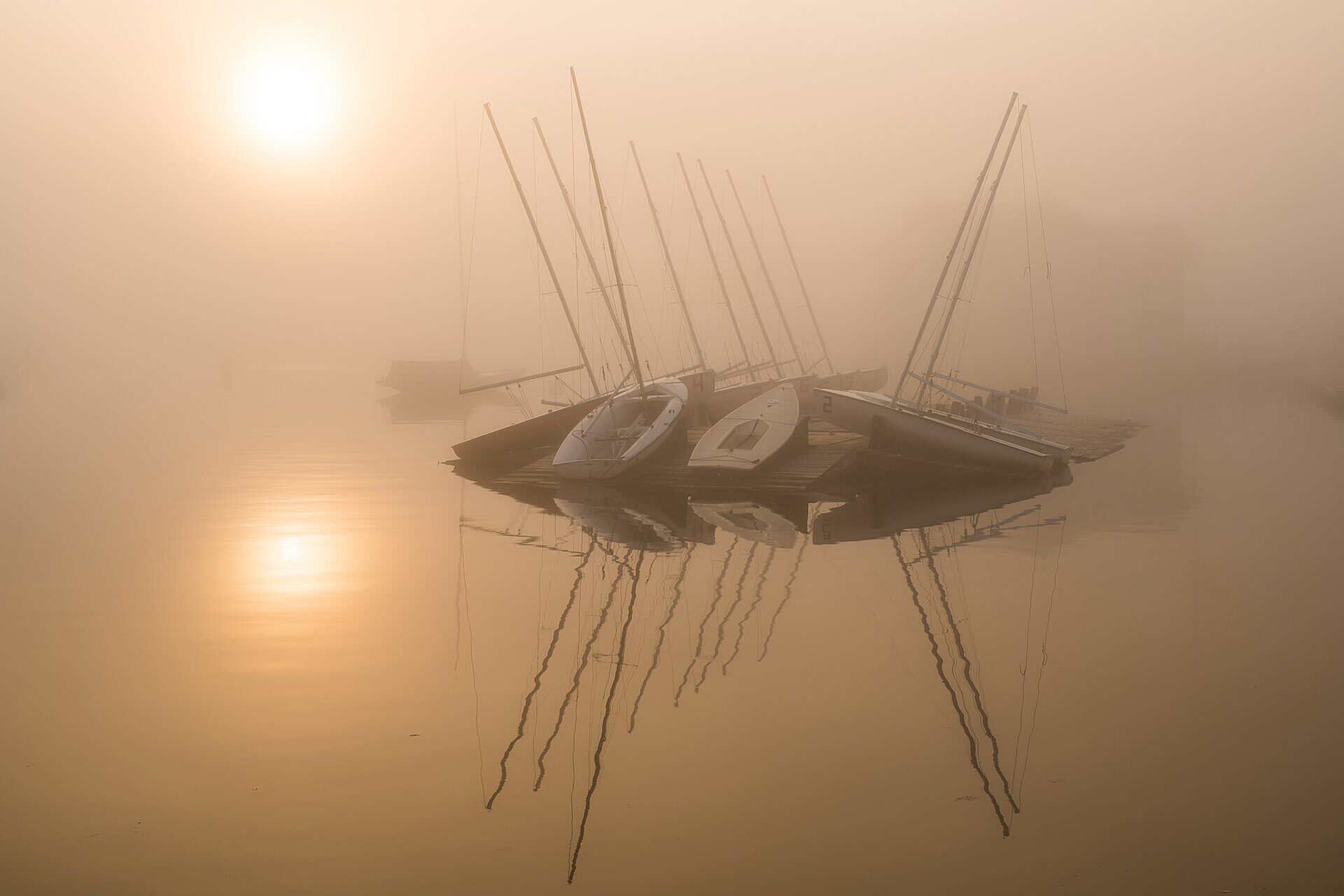
Foggy sunrise over a cove
Watch Hill, Rhode Island, July 2016. The morning sun burns off the fog.Foggy Watch Hill Cove sunrise, Juliancolton, CC BY-SA 4.0
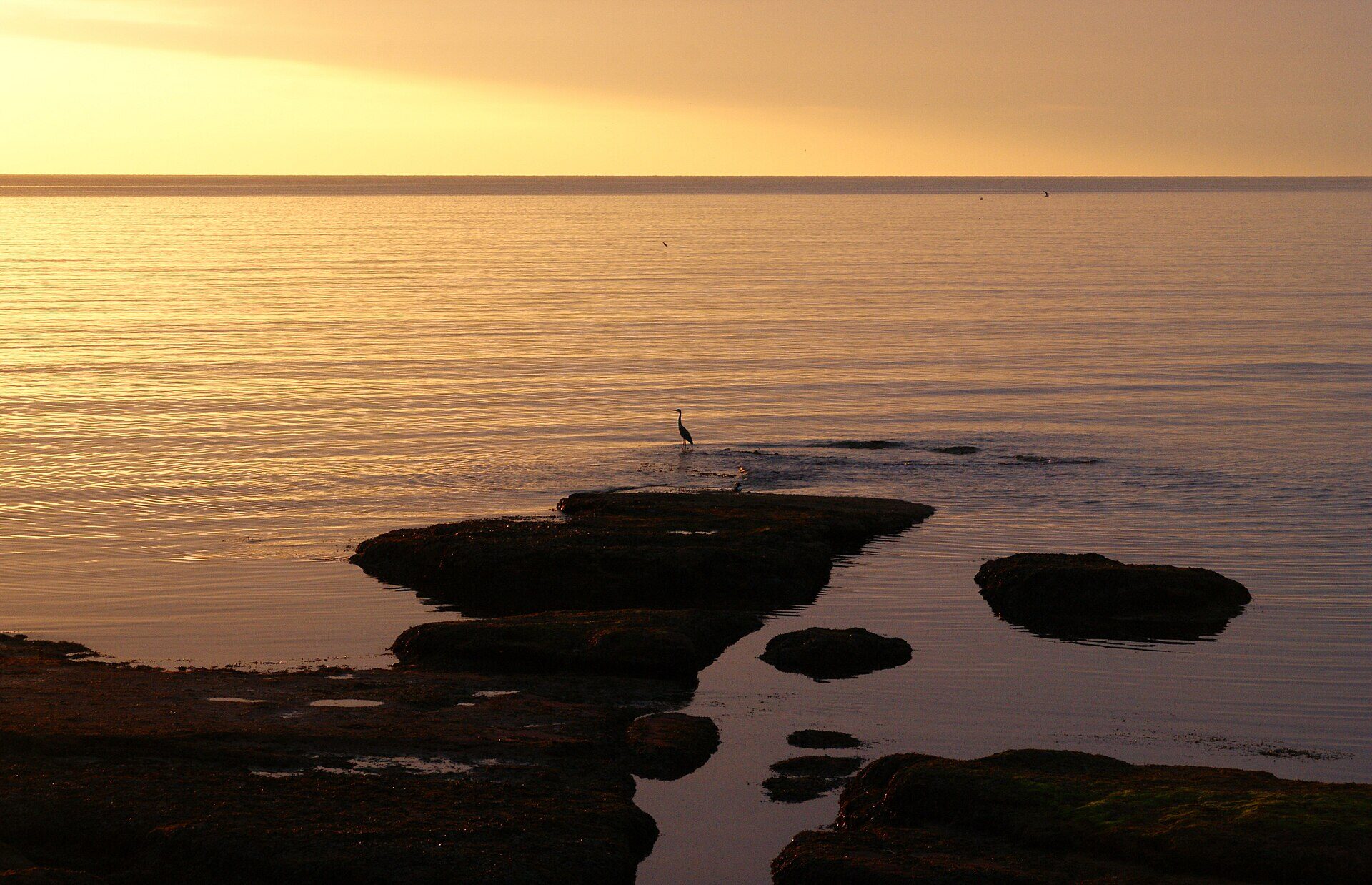
Early light, a heron fishing
A grey heron looks for breakfast just after dawn. South Devon, England.Early light heron fishing, Herbythyme, CC BY-SA 4.0
Foggy sunrise over fields
High Fläming Nature Park, Brandenburg, Germany.Foggy sunrise in High Fläming Nature Park1, KARL-SEBASTIAN SCHULTE, CC BY 2.0
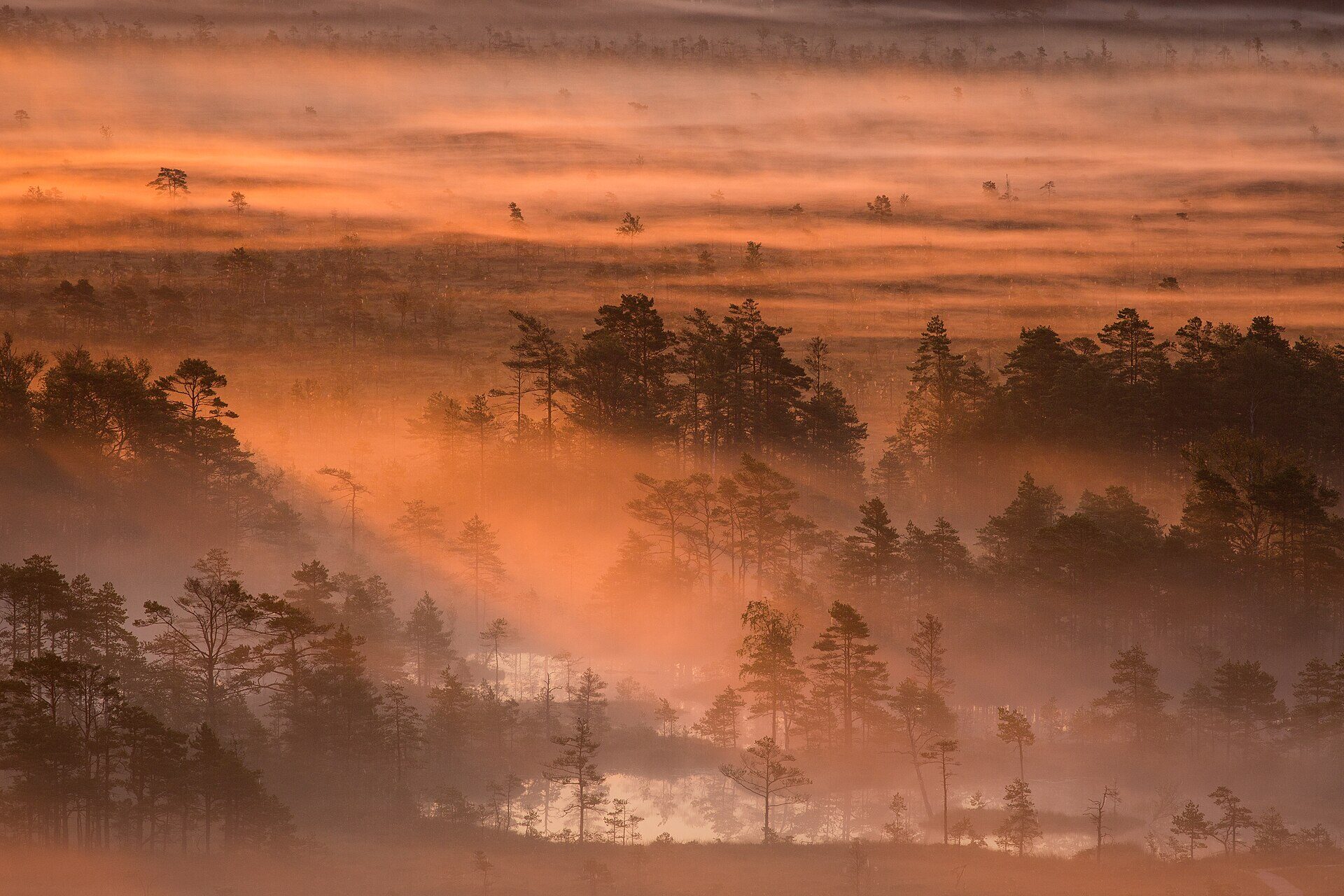
Pink morning in a bog
Pink morning mist over Tolkuse bog, Estonia, September 2014.Roosa hommikuudu Tolkuse rabas, Märt Kose, CC BY-SA 3.0 ee
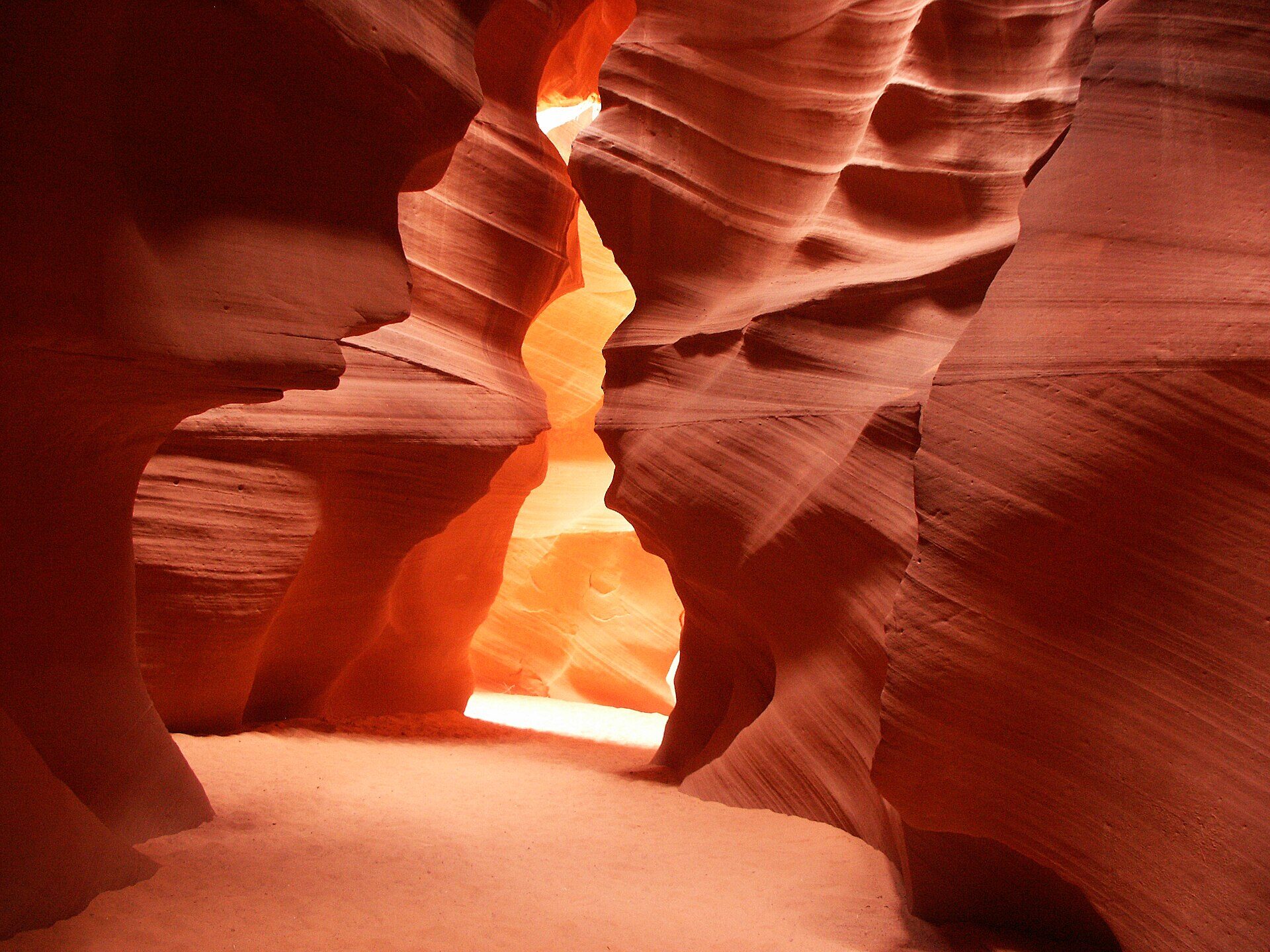
Light in Antelope Canyon
Lower Antelope Canyon, Navajo Tribal Park, Arizona, May 2003.Lower Antelope Canyon 478, Uploaded by Meckimac, CC BY-SA 3.0
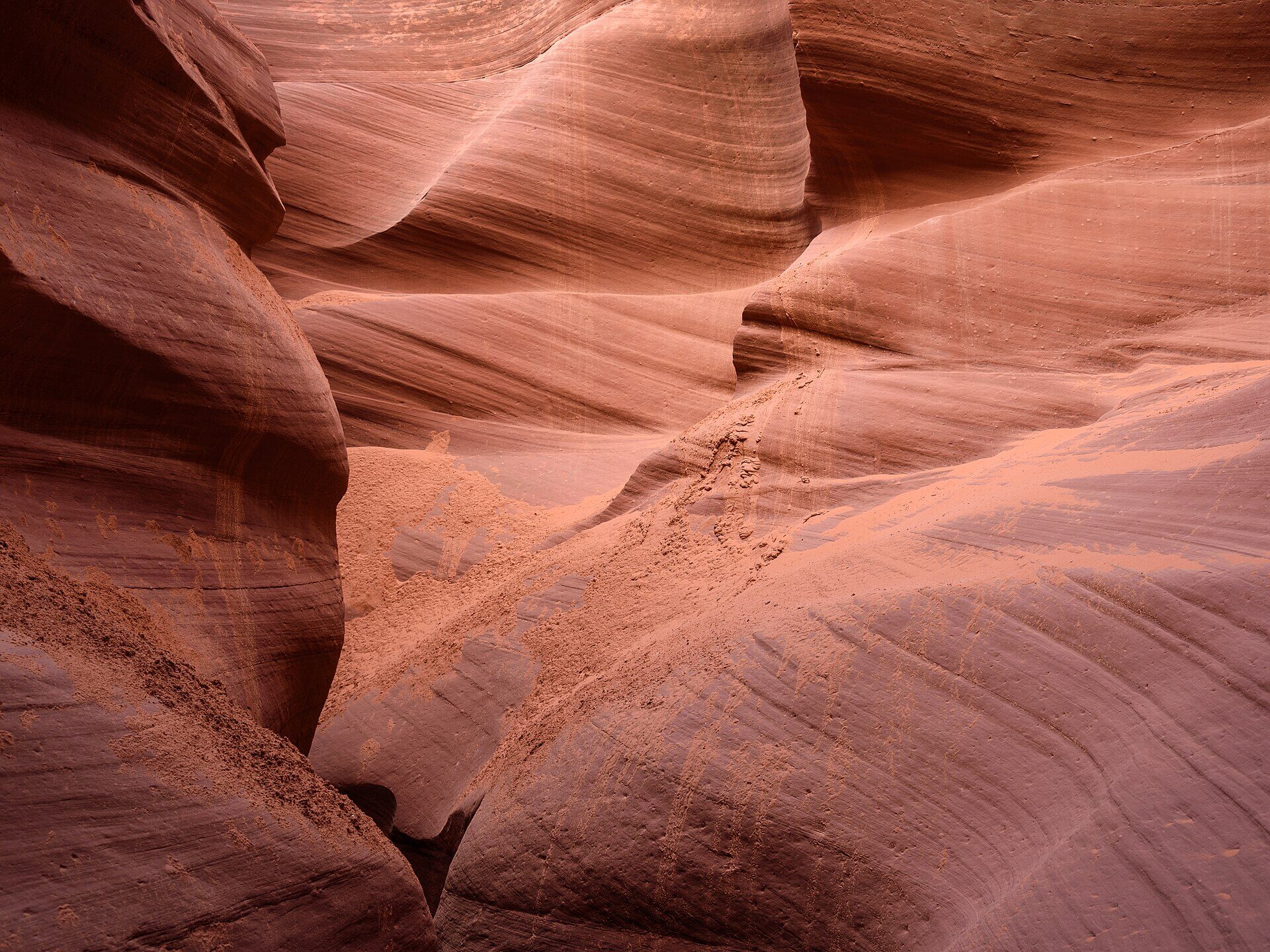
Light falling into a slot canyon
Lower Antelope Canyon, Arizona, November 2018.Lower Antelope Canyon November 2018 008, King of Hearts, CC BY-SA 4.0
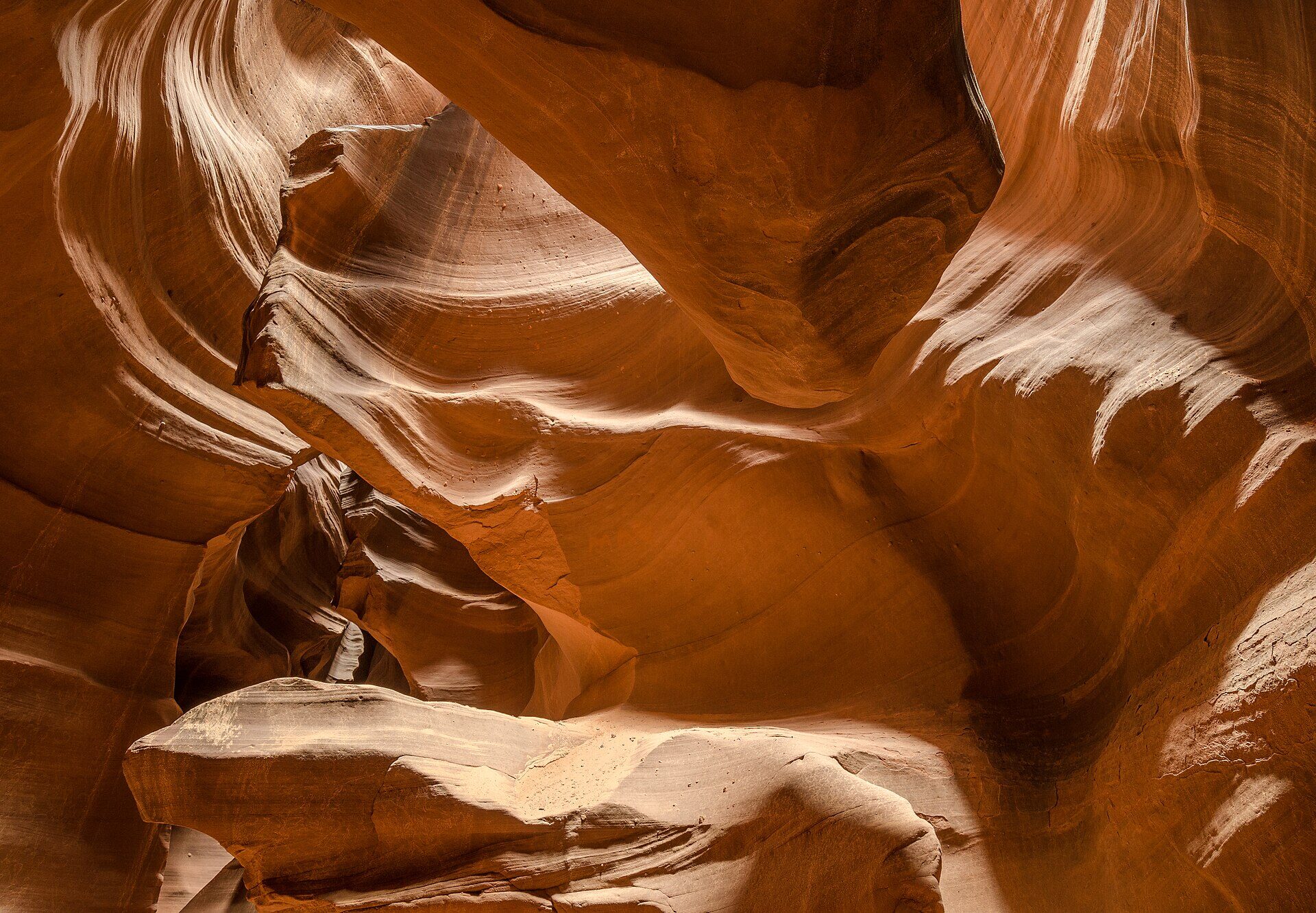
A beam in Upper Antelope Canyon
Upper Antelope Canyon near Page, Arizona, September 2013.Upper Antelope Canyon 03 2013, Tuxyso, CC BY-SA 3.0

Wavelength. Make light work for you.

Download on the App Store

The science of light and sleep

Your body clock is set primarily by light, and a long list of conditions, from ADHD to jet lag to metabolic health, trace back in part to its timing. Each guide summarizes the published research for one area and the light timing it points to.

  1. ADHD

    Most people with ADHD run on a delayed body clock. What timed light can and cannot fix.

  2. Shift work

    Night work pits you against your own clock. The metabolic and cancer risks, and how to put light on your side.

  3. Jet lag

    Your clock shifts about one zone per day. How timed light, eastward vs westward, speeds it up.

  4. Seasonal depression

    Winter shifts the clock and lowers mood. The dose and timing that make light therapy work.

  5. Insomnia & DSPD

    When you cannot fall asleep, the clock may be late, not broken. The evening light limits that matter.

  6. Depression & mood

    Dim days and bright nights track with depression. What large cohorts and light trials show.

  7. Weight & metabolism

    The same meal spikes blood sugar more at night. How light timing ties to weight and diabetes.

  8. Aging & dementia

    Older eyes let in less clock-setting light. How daytime light helps sleep, mood, and sundowning.

  9. Teenagers

    Puberty pushes the clock hours later. Why early school clashes with biology, and what light helps.

  10. Athletic performance

    You are stronger in the late afternoon, and jet lag costs games. How athletes time light.

  11. Focus & productivity

    Bright daytime light measurably sharpens attention. Most desks are too dim to deliver it.

  12. Immune & long-term health

    Your immune system runs on a clock. How a strong day-night light signal supports it.

  13. Melanopic lux

    The unit your body clock reads, why a lux meter cannot report it, and what the numbers should be.

  14. Morning light

    What the evidence actually specifies, why the popular 30-minute rule comes from somewhere else, and how far indoors falls short.